
Brief
Building an AR-15 Upper That Survives Hard Use
A spec-driven guide to AR-15 barrel length, twist rate, gas system, thread pitch, and buffer weight so you can choose or substitute parts with confidence.
Shop this at BLVista
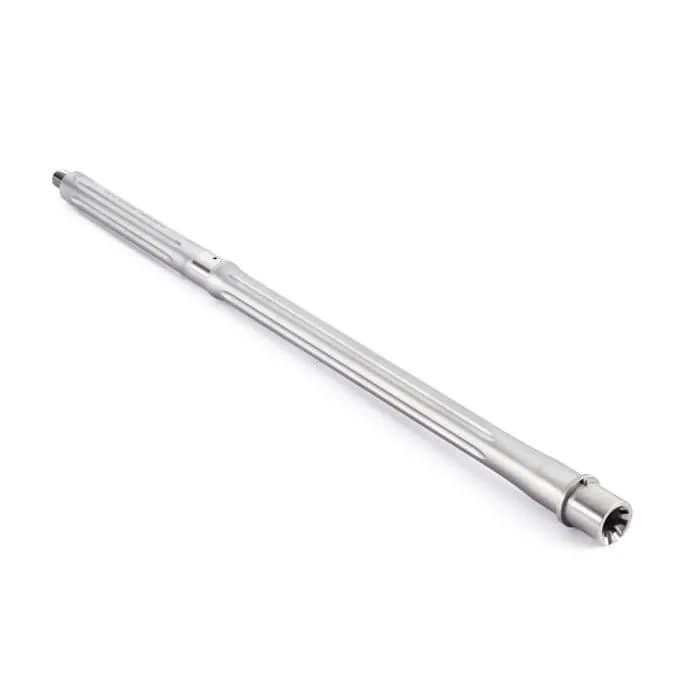
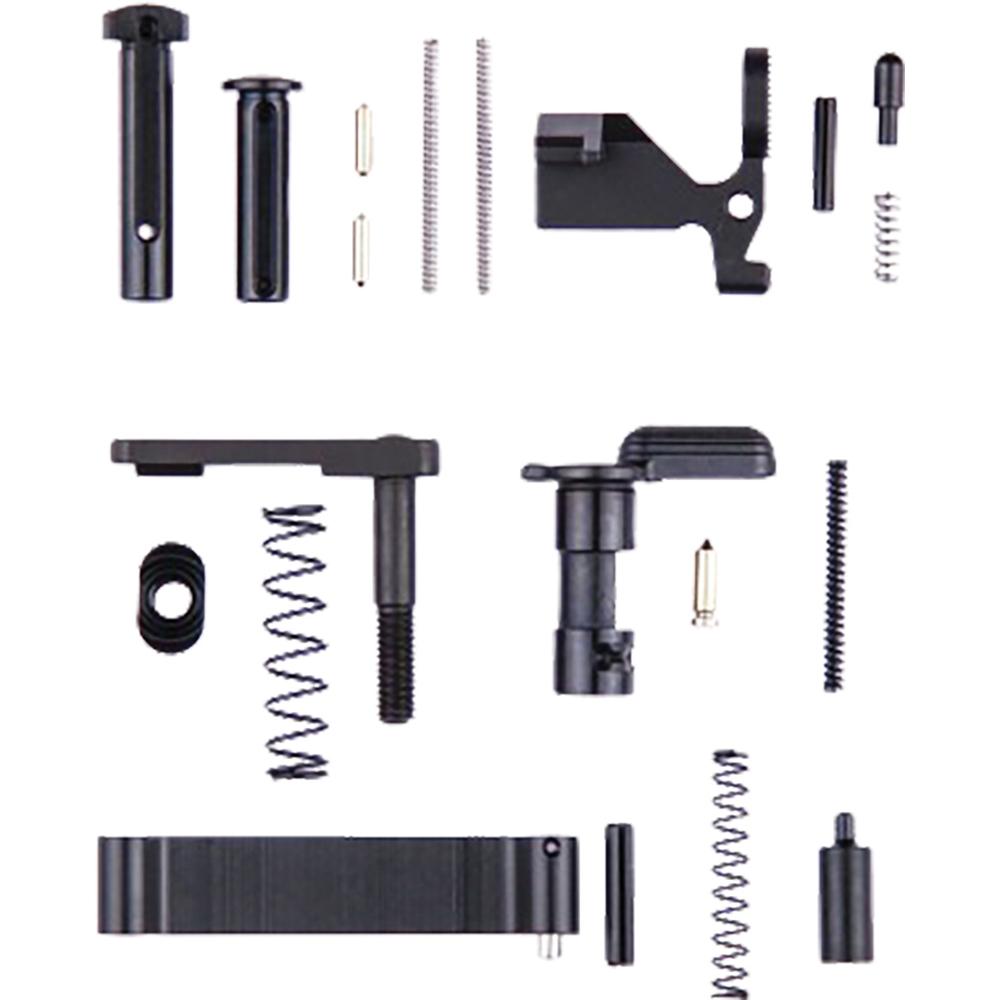
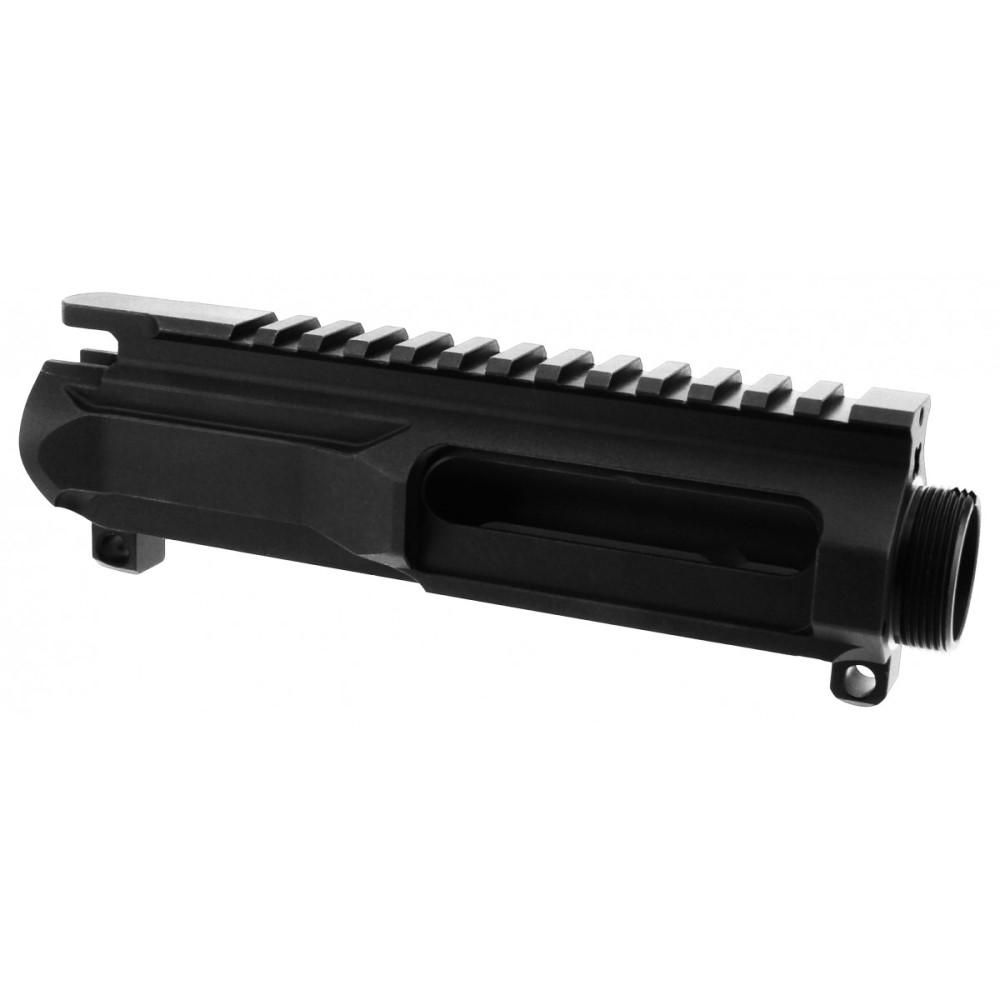
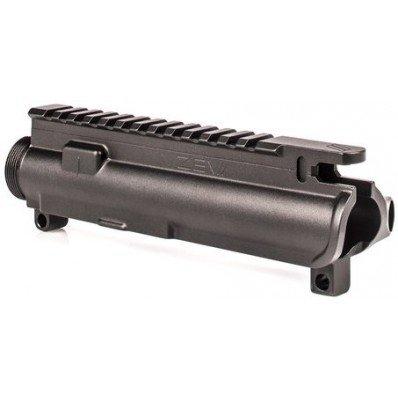
Brand ownership changes, supply gaps, and inventory droughts are a recurring feature of the AR-15 parts market. The practical lesson for buyers is not which company is on top this quarter. It is that you should be able to evaluate a barrel, upper receiver, muzzle device, or handguard on its published specifications so you can substitute intelligently when your first choice is backordered for six months.
This is a spec-driven walkthrough of how to assemble or buy an AR-15 upper that holds zero, feeds reliably, and stays serviceable across a decade of range sessions, carbine classes, and hunting seasons.
Barrel Length Drives Everything Else
Pick length first, because it dictates gas system, velocity, legal configuration, and how the rifle handles indoors.
- 10.3 to 11.5 inch: SBR or pistol territory. Pistol-length gas (roughly 4 inches from chamber to gas port). Violent extraction timing, heavy muzzle blast, and 55gr M193 losing several hundred feet per second compared to a 16 inch tube. Good for vehicle storage and tight interiors.
- 12.5 inch: The compromise many shooters land on. Carbine gas, better dwell than a 10.3, still short enough to clear doorways.
- 14.5 inch: The classic carbine length. Pin and weld a 1.6 inch or longer muzzle device to reach the 16.1 inch measured overall barrel length and it stays a standard rifle. Mid-length gas at 9 inches is the preferred pairing.
- 16 inch: The default. Mid-length gas gives a longer dwell time, lower port pressure, and a noticeably softer impulse than carbine gas at the same length.
- 18 inch: Rifle-length gas, roughly 12 inches. The smoothest cycling of the common options and the sweet spot for 69gr to 77gr match loads pushing past 2,700 fps.
- 20 inch: Full velocity. 55gr M193 runs near 3,240 fps and 62gr M855 near 3,020 fps from this length. Heavy for patrol use, excellent for prone and varmint work.
Steel, Treatment, and Twist
4150 chrome moly vanadium steel is the standard for duty and high volume use. It handles heat cycling better than 4140 and is what most mil-spec profile barrels use. 416R stainless is the precision choice and typically shoots tighter groups, with a shorter practical throat life under rapid fire.
For the bore treatment, chrome lining adds corrosion resistance and barrel life at the cost of a slightly less uniform bore. QPQ salt bath nitride treats the surface without adding material, so it preserves bore dimensions and usually prints smaller groups than chrome, while offering strong corrosion protection. If your rifle lives in a truck through humid summers or salt air, both beat a bare stainless bore.
Twist rate is simple math against bullet weight:
- 1:7: Stabilizes 62gr through 77gr and heavier. The correct default for 5.56 NATO and for anyone shooting 75gr or 77gr match ammunition.
- 1:8: The broadest window, comfortable from 55gr to 77gr.
- 1:9: Best with 55gr to 62gr. Marginal with heavies.
Chamber matters as much as twist. A 5.56 NATO chamber safely fires both 5.56 and .223 Remington. A .223 Wylde chamber splits the difference, retaining 5.56 pressure tolerance while tightening the freebore for better accuracy with match loads. A true .223 Remington chamber should not be fed 5.56 NATO pressure ammunition.
Threads, Muzzle Devices, and Suppressor Planning
Standard 5.56 muzzle threading is 1/2×28. Larger bores such as .308 and most .300 Blackout barrels use 5/8×24. Verify the thread before you buy a brake or a suppressor mount, and confirm your barrel has a properly cut shoulder so the device indexes square. A crooked brake will throw shots and a crooked suppressor mount can cause a baffle strike.
If a can is in your future, decide now. Direct thread is lighter and cheaper. A quick detach mount adds roughly a quarter pound between the taper mount and the device but lets you move one suppressor across several hosts. Suppressed fire also increases back pressure, so plan on an adjustable gas block or a heavier buffer. Our suppressor buyer’s guide covers mount systems, thread pitch matching, and the ownership paperwork timeline in more detail.
Tuning the Recoil System
Buffer weight is the cheapest reliability adjustment on the rifle. Common carbine weights run about 3.0 ounces standard, 3.8 ounces for an H1, 4.6 to 4.7 ounces for an H2, and 5.4 ounces for an H3. Short barrels, suppressed fire, and overgassed uppers benefit from more mass. If your brass is landing at 2 o’clock and the bolt is slamming the buffer face, step up one weight and retest with the ammunition you actually shoot.
Upper Receiver and Handguard Fit
Forged 7075-T6 receivers remain the value standard and are dimensionally consistent enough that most free float handguards with a proprietary barrel nut will index correctly. Billet receivers look better and sometimes offer integrated features, with the tradeoff that some billet uppers do not mate cleanly to every handguard system. M4 feed ramps in the receiver must match M4 ramps in the barrel extension. Mixing an M4 extension with a non-ramped receiver creates a ledge that can cause feeding stoppages.
M-LOK is the dominant accessory interface. Check handguard inner diameter if you plan to suppress, because most cans need clearance beyond a standard 1.5 inch internal profile.
A Five Point Substitution Checklist
When your preferred part is out of stock, confirm the replacement matches on these five points before you order:
- Chambering and twist rate for your intended bullet weight
- Gas system length and gas block journal diameter, commonly .625, .750, or .936 inch
- Muzzle thread pitch and shoulder
- Feed ramp type, M4 or rifle
- Handguard mounting interface and internal clearance
Any part that clears all five will function in place of another. That is the entire point of the platform, and it is why supply disruptions at any single manufacturer should not stall your build.
Maintenance and Long Term Ownership
Barrel life on a 4150 chrome lined 5.56 tube shooting at a sane cadence runs into the tens of thousands of rounds before accuracy degrades meaningfully. Throat erosion accelerates with sustained rapid fire. Track your round count. Stake the gas key on the bolt carrier, check the gas rings, and replace the extractor spring and insert on a schedule rather than after a failure. Store the rifle with a light film of oil on the bolt and inside the upper if humidity is a factor, and keep optics torqued to the manufacturer’s stated value rather than by feel.
For glass to pair with an 18 or 20 inch build, our rifle field optics guide compares magnification ranges against realistic engagement distances. If you are sourcing components, start with AR-15 uppers and barrels or browse the broader BLVista catalog.
What to Decide Before You Order
Settle three questions in order: intended distance and bullet weight, whether a suppressor is coming, and how the rifle will be stored and transported. Those three answers set your barrel length, twist, chamber, thread pitch, and buffer weight. Everything else is preference.
FAQ
A 16 inch mid-length gas barrel is the most balanced choice for most owners. It delivers usable velocity with 55gr to 77gr loads, cycles softer than carbine gas, and requires no additional paperwork in standard rifle configuration.
Choose 1:7 if you shoot 75gr or 77gr match and defensive loads. Choose 1:8 if you want the widest usable range from 55gr up to 77gr. 1:9 is best limited to 55gr and 62gr.
5.56 and .223 barrels are almost universally 1/2×28. .300 Blackout and .308 barrels typically use 5/8×24. Verify before purchasing a brake, flash hider, or suppressor mount.
Usually yes. Suppressors raise back pressure and speed up unlocking. Moving from a 3.0 ounce carbine buffer to an H1 at 3.8 ounces or an H2 near 4.7 ounces, or fitting an adjustable gas block, restores proper timing.
Yes, as long as chambering, gas length, gas block journal diameter, feed ramp type, and handguard interface all match. AR-15 components follow shared dimensional standards, which is why substituting across brands during inventory shortages is straightforward.
Chrome lining favors longevity and corrosion resistance under high volume fire. Nitride preserves bore dimensions and generally shoots slightly tighter groups. Both resist rust far better than untreated stainless in humid or coastal conditions.
Was this useful?