
Brief
Why a 10.5-Inch Barrel Makes Sense for a .300 Blackout AR Build
Learn why a 10.5-inch .300 Blackout barrel is a common sweet spot for suppressed AR builds, with guidance on reliability, twist rate, ammo, and use cases.
Shop this at BLVista
Start here
Suppressor Buying Guide
Read the guideUse this as the parent page for suppressor buyers who need one durable answer instead of chasing isolated product takes and regulatory headlines.
Use the evergreen guide first, then come back to this article for the narrower case or product angle.
.300 Blackout exists for a specific job: deliver meaningful terminal performance from a compact AR platform, with the option to run suppressed and stay reliable across supersonic and subsonic ammunition. That mission set makes barrel length a first-order decision. Pick the wrong length and you either give up too much velocity and energy, or you create a gassing and cycling problem that turns into an ongoing tuning project.
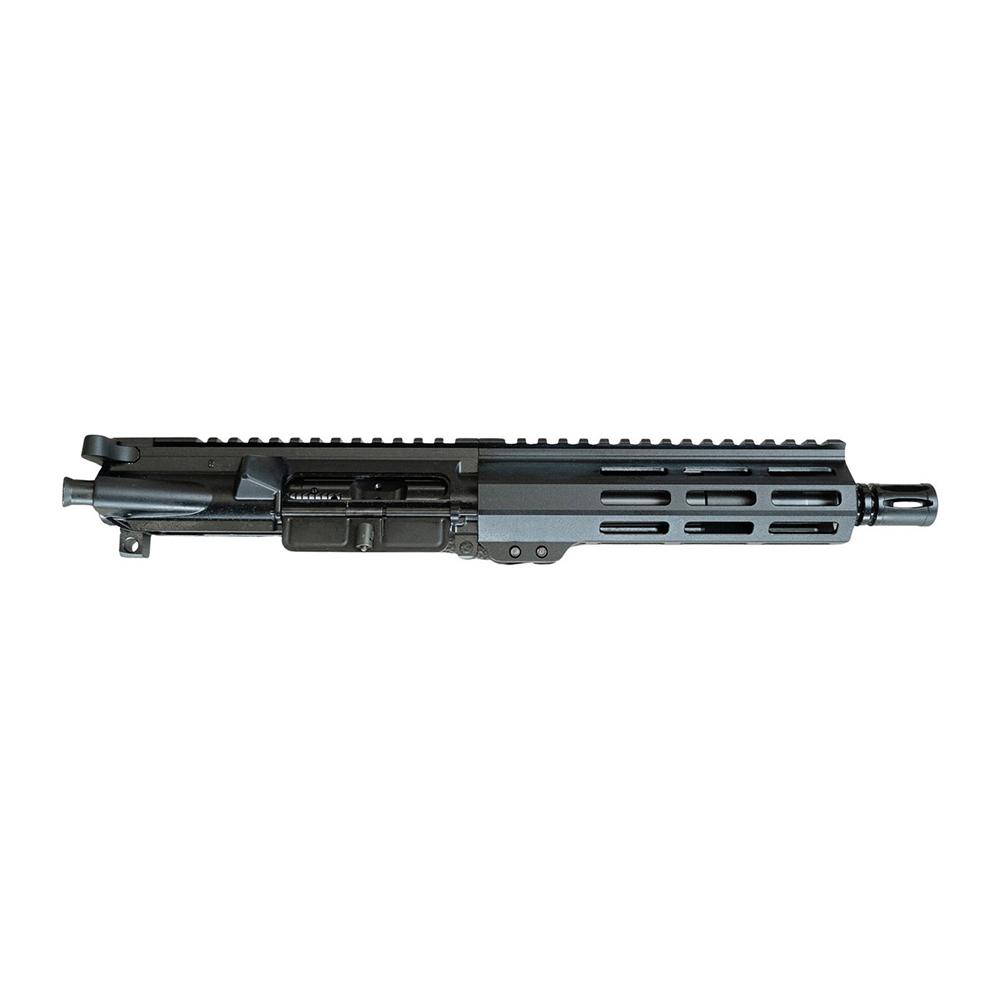
For most shooters building a compact .300 BLK that will actually see range time, field carry, and suppressed use, 10.5 inches lands in a practical sweet spot. It is long enough to support reliable cycling with common gas system choices, and short enough to preserve the handling advantages that made you consider .300 Blackout in the first place.
Start With the Real Question: What Do You Want the Gun to Do?
Barrel length decisions go smoother when you choose the priority up front. In the .300 Blackout world, most builds fall into one of these lanes:
- Suppressed general-purpose: Supers and subs, mixed use, minimal tuning, compact overall length.
- Suppressed subsonic-first: Prioritize staying subsonic with heavy bullets, maximizing quiet performance, accepting some limitations in terminal effect and external ballistics.
- Hunting and unsuppressed range use: Supersonic performance, more velocity and flatter trajectory, less concern about suppressor-related gas behavior.
A 10.5-inch .300 BLK barrel tends to serve the first lane better than any other single length because it balances dwell time, pressure, and usable velocity without pushing the platform into finicky territory.
Why 10.5 Inches Works So Well in .300 Blackout
1) It keeps the cartridge in its intended performance envelope
.300 Blackout was built to perform from short barrels. Around 10.5 inches, typical supersonic loads still produce energy in the same neighborhood shooters expect from 5.56 NATO out of longer barrels. That matters in real use because it preserves dependable terminal performance without forcing you into a 16-inch gun just to get back what you lost at the muzzle.
In practical terms, 10.5 inches gives you enough velocity to make common supersonic hunting and defensive loads behave as designed at realistic distances, especially in the 25 to 150 yard band where compact .300 BLK rifles and pistols tend to live.
2) It supports reliable cycling across supers and subs
.300 Blackout’s flexibility is also its trap. The gas requirement for a 110 to 150 grain supersonic load and a 190 to 220 grain subsonic load can be very different, especially once you add a suppressor and the backpressure that comes with it. Some setups run supers fine and choke on subs. Other setups run subs but feel over-gassed and harsh on supers.
At 10.5 inches, dwell time and port pressure are generally more forgiving. Many quality barrels at this length can run a broad spread of supersonic and subsonic ammunition without demanding an adjustable gas block, special buffer weights, or constant experimentation. Less tuning complexity also means fewer failure points over the ownership lifecycle.
3) It preserves the handling advantage once you add a suppressor
A suppressor changes the whole length conversation. A compact 10.5-inch host stays manageable after you add several inches of can. In thick woods, vehicles, tight blinds, or moving through a property, overall length influences everything from muzzle control to how often you snag the gun on gear.
This is one of the most overlooked parts of “barrel length optimization.” A 16-inch .300 BLK with a suppressor handles like a much longer rifle. A 10.5-inch .300 BLK with a suppressor still handles like a compact carbine.
Going Shorter: The Tradeoffs Below 10.5
Shorter barrels can work, but the margin shrinks fast.
- 7.5 inches: Velocity loss on supersonic loads is significant, and you can end up with less reliable cycling depending on ammo, suppressor, and gas setup. This is where many “it runs one load but not the other” builds are born.
- 8.5 inches: A workable option for subsonic-focused use, especially if your primary goal is maximum compactness with a suppressor. Expect to be more selective with ammunition and more attentive to gas and buffer tuning than you would be at 10.5.
If you plan to shoot mostly supers, hunt, or want consistent function across a wide range of ammo, the extra length at 10.5 inches usually pays for itself in reduced troubleshooting and better external ballistics.
Going Longer: When 12 to 16 Inches Makes More Sense
Longer barrels still have a place in .300 Blackout.
- 12 to 13.9 inches: A strong middle ground if you want more velocity and a bit more effective distance while staying compact enough for suppressor use.
- 16 inches: Best suited to unsuppressed use or supersonic-only priorities where you want flatter trajectory, more retained energy, and fewer constraints on ammo selection for hunting.
One practical consideration for suppressed shooters: heavy subsonic loads can creep toward transonic speeds in longer barrels depending on conditions. If your goal is consistent subsonic performance for suppressed shooting, longer barrels add one more variable you may need to manage with careful ammo selection.
Twist Rate: Match It to Bullet Weight and Your Suppressor Plan
Barrel length gets the attention, but twist rate is the stability decision that shows up later, usually when someone starts shooting heavy subsonics or experimenting with different projectile designs.
- 1:7 twist: A strong choice if heavy subsonics are a priority, especially with a suppressor. It can provide added stability margin for long, heavy bullets.
- 1:8 twist: A balanced option for mixed use. It tends to work well with common supersonic loads and remains compatible with many subsonic options, particularly in practical field conditions.
For buyers trying to reduce risk, a 10.5-inch barrel with a 1:8 twist is a common “safe middle” because it covers typical supersonic range and hunting ammo while still supporting many popular subsonic loads used for suppressed shooting.
What to Look For in a 10.5-Inch .300 BLK Barrel
A barrel’s spec sheet tells you more than most people think. For a hard-use .300 Blackout build, these points matter:
- Steel and heat treatment: 4150 CMV is a proven choice for durability in high round count training and sustained firing schedules.
- Finish: Salt-bath nitride offers strong corrosion resistance and easy cleaning, which matters if the gun rides in a truck, gets carried in wet woods, or sees suppressed use that increases fouling.
- Gas system and port tuning: Pistol-length gas is common on 10.5-inch .300 BLK. What matters is whether the port is sized and the system is tuned to run real ammo reliably, not just one boutique load.
- Profile and weight: A lighter “gunner” style profile can keep a suppressed build from feeling front-heavy. That shows up during long carries, extended range sessions, and quick target transitions.
Field Reality: A Compact Brush Gun Setup
A 10.5-inch .300 Blackout makes a lot of sense in dense woods where shots are close, angles are awkward, and maneuverability matters. In those conditions, you want a rifle that comes on target quickly, carries comfortably, and stays controllable when you are moving through brush or climbing into a stand.
Optics selection should match that reality. A durable enclosed-emitter red dot with a waterproof rating and a simple, fast reticle can be a better fit than a magnified optic for close-range hunting and property use. Weight also matters more on short guns because every ounce ends up concentrated forward once a suppressor is added.
A Simple Checklist to Choose Your .300 Blackout Barrel Length
- Will you run a suppressor most of the time? If yes, prioritize overall length and gas behavior.
- Will you shoot both supers and subs? If yes, choose a length that reduces tuning demands, often 9 to 10.5 inches.
- Is hunting your primary use? If yes, decide your realistic shot distance and consider 10.5 for close woods, 12 to 16 for more reach.
- Do you want minimal maintenance and troubleshooting? If yes, buy a quality barrel with proven port tuning and stick to reputable ammo.
- What twist rate matches your ammo plan? Heavy subsonics push you toward faster twists, mixed use often lands on 1:8.
Bottom Line
If your goal is a compact, suppressed .300 Blackout that runs reliably with both supersonic and subsonic ammunition, 10.5 inches is a strong default choice. It keeps the cartridge operating where it was meant to, supports reliable cycling without turning the build into a tuning experiment, and stays practical once you add a suppressor, optic, and light.
Related reading
For the broader picture, start with Suppressor Buying Guide.
- Suppressor Buying Guide – Use this as the parent page for suppressor buyers who need one durable answer instead of chasing isolated product takes and regulatory headlines.
- Ambient-Intake Suppressors: Cooler Cans, Clearer Glass, Better Real-World Pace
- Canik Void Suppressors: What the Line Offers and How to Choose the Right Can
- Do You Still Need Hearing Protection with a Suppressor? Practical Guidelines for Real Range and Field Use
Shop related gear
- Suppressors & Accessories – Browse mounts, muzzle devices, adapters, and other can-support gear.
- Ear Muffs – Keep hearing protection in the plan, especially for indoor lanes and higher-pressure setups.
- Barrels – Match thread pattern, barrel length, and host use before you commit to a suppressor setup.
- Tetra Gun Suppressor Cleaner Bath – A straightforward option for cleaning intervals when your setup runs dirty.
FAQ
For most shooters, 9 to 10.5 inches is the most practical range for a suppressed .300 Blackout. It keeps overall length manageable and tends to provide enough dwell time and gas pressure for reliable cycling with both supersonic and subsonic loads.
Yes, a 10.5-inch .300 Blackout can work well for hunting at typical woods distances. It pairs well with supersonic hunting ammo in close to moderate ranges, especially where maneuverability matters more than flatter trajectory.
Many quality 10.5-inch .300 BLK barrels are tuned to cycle subsonic ammunition, especially when suppressed, without requiring an adjustable gas block. Reliability still depends on ammo choice, suppressor backpressure, magazine condition, and overall build quality.
For most mixed-use builds, 7.5 inches involves meaningful velocity loss with supersonic loads and can reduce reliability across different subsonic loads. It can be made to work, but it usually demands more careful tuning and ammo selection than a 10.5-inch setup.
Choose 1:7 if heavy subsonic bullets are your priority, especially with a suppressor. Choose 1:8 if you want a balanced .300 Blackout barrel for common supersonic loads and occasional subsonic use. Either can work, but matching twist rate to your bullet weights reduces stability and accuracy problems over time.
For durability and corrosion resistance, many shooters favor 4150 CMV steel with a nitride finish. This combination holds up well to high round counts, wet hunting conditions, and the added fouling associated with suppressed shooting.
Yes. A 10.5-inch barrel typically falls under pistol or SBR configurations depending on the presence and type of stock, brace, and overall build. Confirm federal, state, and local requirements before assembling or modifying a firearm, and follow all transport and storage rules that apply where you live and travel.
Was this useful?