
Brief
The KRISS Vector in .45 ACP as a Home Defense Gun
KRISS Vector SBR and SDP in .45 ACP broken down by barrel length, weight, Glock 21 magazine capacity, recoil behavior, suppressor fit, and ownership tradeoffs.
Shop this at BLVista
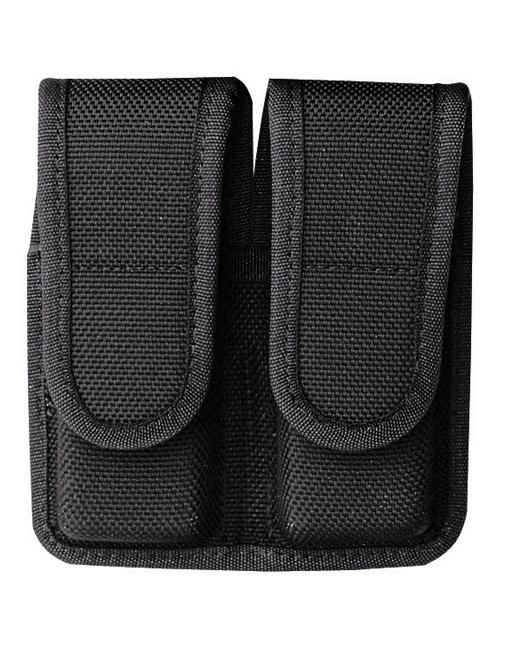 Bianchi Model 7302H AccuMold Double Magazine Pouch for Glock 20 21 Hook and Loop Black
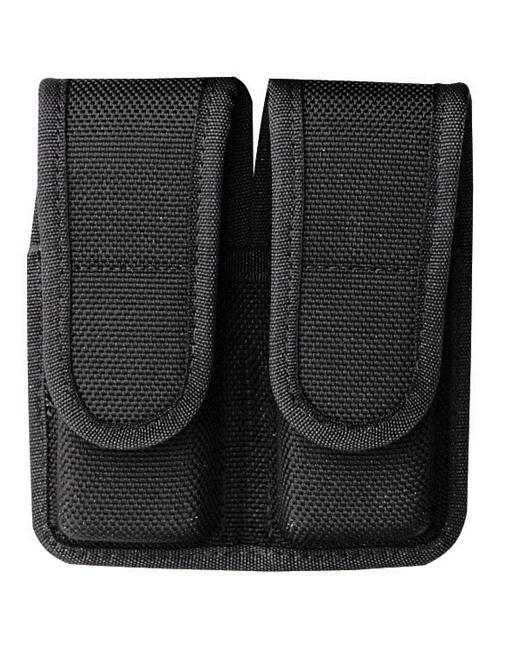 Bianchi Model 7302H AccuMold Double Magazine Pouch for Glock 20 21 Hidden Snap Black
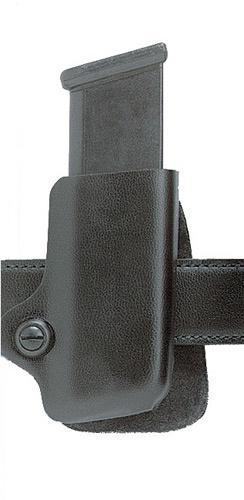 Safariland for Glock 20 21 29 30 Concealment Magazine Holder Paddle Right Plain Black
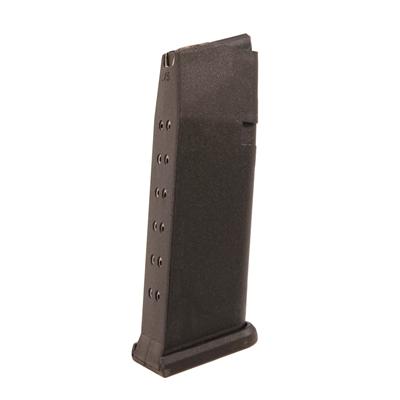 Promag Magazine for Glock 21 .45 ACP Black Polymer 13/rd
Most home defense conversations end at three choices: a handgun on the nightstand, a shotgun in the closet, or an AR-15 in a quick access safe. The KRISS Vector belongs to a fourth category, the pistol caliber carbine built around an operating system that does not send the bolt straight back into your shoulder. Whether that matters to you depends on how you actually intend to use the gun, and on how honest you are about the tradeoffs that come with it.
What the numbers actually are
The Vector line is chambered in .45 ACP and shares a polymer chassis with steel inserts that the action rides on. The differences between models come down to barrel length and stock configuration.
- Vector SBR: 5.5-inch barrel, folding stock, 16 inches overall with the stock folded and 25.25 inches extended, 6 pounds 3 ounces unloaded. Registration under the National Firearms Act applies.
- Vector SDP: 5.5-inch barrel, no stock, rear sling mount, roughly 18 inches overall, 5 pounds 12 ounces unloaded.
- Vector CRB: 16-inch barrel with a folding stock, which keeps it out of NFA territory at the cost of maneuverability indoors.
Original MSRP at launch sat near $1,995 for the SBR and $1,895 for the SDP, and a fully accessorized SBR with a holographic sight, weapon light kit, vertical grip, and magazine extension pushed close to $3,000. Current street pricing has moved since, but the ratio holds: the gun is the smaller half of what a completed setup costs.
Why the barrel length matters more than the caliber debate
A 5.5-inch barrel that protrudes only about 2.5 inches past the frame is the single most useful feature for interior work. Move through a 30-inch doorway with a full-length 18-inch shotgun or a 16-inch carbine and you learn quickly how much muzzle you have to manage. Cut the overall package to 16 inches folded and the geometry problem largely disappears. That compactness is also why the SBR path is worth the paperwork for anyone serious about the role.
The .45 ACP question is less interesting than people make it. A 230-grain FMJ leaves a service pistol around 835 feet per second, and a 230-grain +P hollow point runs near 950 fps. Out of a 5.5-inch barrel you gain modest velocity over a 4.5-inch pistol tube, nothing dramatic. What you gain is stability, sight radius, and a third and fourth point of contact. The cartridge is doing pistol work with rifle ergonomics.
The recoil system and what it feels like
The Super V action redirects the bolt down and away from the shooter instead of straight rearward. In practice, muzzle rise on rapid strings is noticeably flat, and +P loads that fight you in a 1911 stay controllable here. There is a tradeoff. You feel the mass moving downward as the gun cycles, and that impulse reads as unfamiliar to shooters raised on direct impingement rifles and blowback carbines. Some adapt in a magazine or two. Others never fully like it. Handle one before you commit.
A representative speed drill makes the point. At 7 yards on an 8-inch center of mass circle, with a three second par, the stocked SBR wearing a holographic sight will put well into the mid teens for hits, while the stockless SDP with irons lands around ten. That gap is the stock, not the action.
Magazine logistics, the underrated advantage
The Vector feeds from factory Glock 21 magazines. Standard capacity is 13 rounds, and a factory extension kit brings that to 30. If you already run a G21, one magazine inventory serves both guns, which simplifies range days, training classes, and long term storage rotation. Proprietary magazines age badly as a purchase decision because supply and price are outside your control. Common magazines are an ownership feature, not a spec sheet footnote. Stock enough that you can retire a suspect magazine without hesitation, and mark them so you can track which one caused a stoppage. Browse Glock 21 magazines and extensions when you build out your rotation.
Ergonomic realities
The safety selector is ambidextrous and long, but smooth polymer with little texture means gloved or wet hands can slip. Shooters with small to medium hands often break grip to reach it. The charging handle, bolt catch, and magazine release live on the left side with no mirrored option. Right-handed shooters can lock the bolt back one-handed by pulling the handle and dropping the index finger onto the paddle. Left-handed shooters have to give up the firing grip to do the same. If you are a southpaw, budget training time to build a repeatable workaround rather than assuming you will improvise under stress.
Support hand placement is another point of divergence. The magwell hold feels cramped to long-armed shooters, and most people end up preferring a short vertical grip. That improves control and pushes the hand farther from the magazine release, so reload rehearsal matters more here than on an AR.
Suppressors, threads, and lights
The 5.5-inch barrels ship threaded with a protector, using the common .45 ACP pattern, so a dedicated large bore can mounts directly. This is where the platform gets interesting. A 230-grain .45 ACP load is subsonic from the factory, so there is no supersonic crack to manage and no subsonic ammunition premium to pay. Pistol caliber cans commonly deliver reductions in the high twenties to mid thirties in decibels depending on host and load, which is meaningful for indoor use where an unsuppressed muzzle blast is genuinely disorienting. Remember that adding a can also adds several inches of length and often 8 to 12 ounces of weight forward, which partially undoes the compactness you bought the short barrel for. If you are weighing that decision, our suppressor buyer’s guide walks through host compatibility, mount types, and wait time expectations.
Lights mounted directly above a short barrel collect carbon on the lens fast. Plan on wiping the bezel every range session, and verify your light still throws a clean beam after a few hundred rounds. Any weapon light in this role should be at minimum a sealed, impact-rated body with a positive tape switch that will not activate inside a case.
Optics and mounting
The full-length Picatinny top rail accepts anything, which is both convenient and a trap. On a gun this short, a compact holographic or reflex sight with an unlimited eye box makes far more sense than a magnified optic. Folding backup irons ship standard. If you mount a red dot, keep it low enough that the folded irons still co-witness, and confirm your sling attachment point does not interfere with the rear sight. Rear-mounted sling attachments on the top rail work better for right-handed shooters than a side socket at the stock pivot, which lets the gun roll when you take both hands off. Our red dot selection guide covers footprint compatibility and window size choices that carry over directly to compact carbines.
A short checklist before you buy
- Role clarity: interior defense and vehicle storage favor the SBR or SDP. General range and training use favors the 16-inch CRB with no paperwork.
- Handedness: left-handed shooters should test the controls in person before committing.
- Ammunition cost: .45 ACP runs materially more per round than 9mm. A 1,000 round training year costs real money. Factor it.
- Total system budget: optic, light, sling, spare magazines, and a can will exceed the price of the gun.
- Storage and access: measure your safe or quick access box against the 16-inch folded length before you order.
- Local compliance: short barreled configurations and magazine capacity limits vary by state. Confirm before you buy, not after.
Maintenance and long term ownership
The polymer chassis with steel inserts holds up well to humidity and sweat, but the action has more moving mass traveling in more directions than a simple blowback design. Keep the rails wet with a quality lubricant and clean the recoil channel rather than just the bore. A can adds gas and carbon fouling, so shorten your cleaning interval accordingly. Threads deserve attention too. Reinstall the protector when the suppressor comes off and inspect for damage after any drop or hard case impact. Springs in high capacity magazine extensions are the component most likely to age out, so date them and rotate.
Deciding whether the Vector earns a place in your plan
Buy the Vector if compactness, flat-shooting rapid fire, and shared Glock 21 magazine logistics solve a problem you actually have. Skip it if you need fully ambidextrous controls, if .45 ACP training volume strains your budget, or if you want the cheapest capable home defense long gun. It is a specialist tool with an unusual operating system, and specialists reward the owners who train on them. If you are still mapping out your whole defensive setup, the pistol caliber carbine selection and the readiness guide are the right next stops.
FAQ
It performs well in the role. At 16 inches folded with a 5.5-inch barrel, the SBR clears interior doorways more easily than a shotgun or a 16-inch carbine, and the Super V action keeps muzzle rise low for fast follow-up shots with 230-grain .45 ACP. The main limitations are left-side-only bolt and magazine controls and higher ammunition cost than 9mm.
Factory Glock 21 magazines, 13 rounds standard. A factory extension kit raises capacity to 30 rounds. Using a common magazine pattern means better availability and lower cost than proprietary designs, and it lets G21 owners maintain one magazine inventory across two guns.
The SBR pairs the 5.5-inch barrel with a folding stock and requires NFA registration. The SDP uses the same 5.5-inch barrel with no stock and weighs 5 pounds 12 ounces. The CRB has a 16-inch barrel with a folding stock and needs no NFA paperwork. Internals are otherwise the same across the line.
Yes. The 5.5-inch barrels ship threaded with a protector using the standard .45 ACP pattern. Because 230-grain .45 ACP is subsonic from the factory, no special ammunition is needed. Expect the can to add several inches of length and meaningful front weight, which affects handling indoors.
Launch MSRP was near $1,995 for the SBR and $1,895 for the SDP. Pricing has shifted since, and a complete setup with an optic, weapon light, vertical grip, sling, and spare magazines typically adds well over $500 to $1,000 on top of the firearm.
Only partly. The safety is ambidextrous, but the charging handle, bolt catch, and magazine release are fixed on the left side and cannot be swapped. Left-handed shooters need to develop a deliberate manipulation technique and rehearse it, since locking the bolt back requires releasing the firing grip.
Was this useful?