
Brief
Choosing a Pistol Caliber Carbine in 9mm, 10mm, or 5.7
Compare pistol caliber carbines by barrel length, weight, capacity, magazine cost, and suppressor fit, with specs for the Kuna, MPX K, FPC, AP5, and more.
Shop this at BLVista
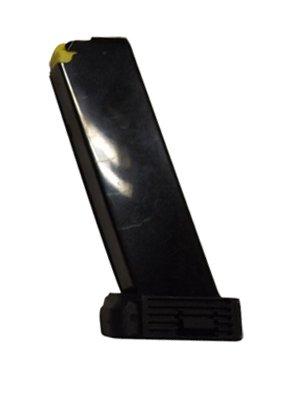
A pistol caliber carbine sits between a handgun and a rifle, and that middle ground is the whole point. You get a shoulder-fired platform, a real sighting radius, and a stock you can index against your body, all while shooting ammunition that costs roughly half of what 5.56 does. For home defense inside a hallway, for a truck or pack gun, and for high-volume range days, that combination is hard to match.
The catch is that PCCs vary more than ARs do. Operating systems, magazine patterns, barrel lengths, and thread pitches all differ from gun to gun, and those differences show up in recoil, suppressor compatibility, and how much you will spend over five years of ownership. Below is how to read the specifications that matter, followed by the platforms that define each price band.
Operating System Drives Recoil and Maintenance
Three approaches dominate the market, and each carries a clear tradeoff.
- Direct blowback. Simplest and cheapest. A heavy bolt is held closed only by spring pressure and mass, so felt recoil is a shove rather than a snap, and carbon ends up in the receiver. Very few parts to break. Found on the Smith & Wesson M&P FPC, PSA AK-V, and Ruger LC Carbine.
- Delayed blowback. Rollers, radial lugs, or hydraulic buffers slow bolt opening and cut reciprocating mass. The recoil impulse is noticeably flatter, which matters when you are shooting a 30-round magazine on a timer. Seen on the Springfield Armory Kuna, Century Arms AP5, CMMG Banshee, and B&T APC9 Pro.
- Short-stroke gas piston. The Sig MPX approach. Keeps fouling out of the receiver and eliminates the need for a buffer tube, so folding stocks work and the gun can be fired folded. It also adds cost.
If you shoot 200 rounds a year, blowback is fine and you keep the money. If you shoot 2,000 rounds a year or run a suppressor, the delayed and piston systems pay you back in comfort and cleanliness.
Barrel Length, Overall Length, and the 16-Inch Line
A 16-inch barrel keeps the gun legally a rifle, allows a standard stock, and adds velocity. A 115 grain 9mm load leaving a 4- to 5-inch pistol barrel at roughly 1,150 fps typically picks up a few hundred feet per second from a 16-inch tube, which tightens up terminal performance at 50 yards and flattens the trajectory. The price is handling: a 30.4-inch carbine is not a hallway gun.
Short-barreled configurations trade that velocity for maneuverability. A 4.5-inch MPX K at 22.5 inches overall or a B&T APC9 Pro at 15.2 inches with the stock folded clears doorways and fits in a nightstand safe. Going under 16 inches with a stock puts you in registered short-barreled rifle territory, which means a transfer tax and a wait, so budget for it before you commit to the platform.
Reference Specs Across the Field
- Springfield Armory Kuna (about $959): 9mm, roller-delayed, 6-inch barrel, 30+1, 5 lbs 5 oz, 15.5 inches folded and 24.5 inches deployed. Full-length Picatinny top rail, M-LOK forend, 1913 rear interface, bufferless. Factory magazines run near $25, which is the sleeper value here.
- Sig Sauer MPX K (about $2,199): 9mm, gas piston, 4.5-inch barrel, 35+1, 5 lbs, 22.5 inches overall. Fully ambidextrous AR controls. Also offered in a 16-inch rifle and a 3.5-inch Copperhead.
- Smith & Wesson M&P FPC (about $549): 9mm, blowback, 16.25-inch barrel, 17 and 23 round M&P magazines, 5.02 lbs, 30.4 inches open and 16.38 inches side-folded with an optic mounted. Expect 2 to 3 inch groups at 50 yards with range ammunition and a red dot.
- PSA AK-V (about $849): 9mm, blowback, 10.5-inch barrel, 30 rounds on CZ Scorpion pattern magazines, 6.7 to roughly 8 lbs depending on configuration, 19 inches folded and 27 inches extended. Last-round bolt hold-open.
- Century Arms AP5 (about $1,299): 9mm, roller-delayed, 8.9-inch barrel, 30 rounds, 5.5 lbs. Built in Turkey on licensed HK tooling. Softest shooting non-competition option on this list; accessory mounting is the compromise.
- CMMG Banshee Mk10 (about $1,420): 10mm, radial delayed blowback, 8-inch barrel, 15-round Glock magazines, 5.5 lbs, 23.8 inches overall. AR furniture and triggers drop in.
- B&T APC9 Pro (about $2,421): 9mm, hydraulic-assisted blowback, 6.8-inch barrel, 30 and 33 rounds, 5 lbs, 15.2 inches folded. Serialized upper with swappable lowers for B&T, Glock, or P320 magazines. Tri-lug muzzle interface, so plan on an adapter for a 1/2×28 can.
- Ruger PC Carbine (about $777): 9mm, dead-blow blowback with a tungsten weight, 16.12-inch barrel, 17 rounds, 6.8 to 7.2 lbs. Takedown design, reversible charging handle, ships with both Ruger and Glock magwells.
- JP Enterprises JP-5 (about $3,289): 9mm, roller-delayed with interchangeable locking pieces, 14.5-inch match barrel with compensator, Glock magazines, roughly 6.7 lbs. Built for USPSA PCC.
- Ruger LC Carbine (about $549): 5.7x28mm, blowback, 16.25-inch barrel, 20+1, 5.9 lbs, 28.7 to 30.6 inches with the adjustable folding stock.
Magazines Are the Real Long Term Cost
Twelve magazines is not an unusual number for a competitor, and eight is reasonable for a defensive gun with spares in the safe. Scorpion pattern polymer magazines can be found near $15 and Glock pattern magazines are stocked everywhere, which is why the AK-V, Banshee, and JP-5 are cheap to feed the accessories side. Proprietary magazines are not automatically a problem, but price them before you buy the gun. A platform with $45 magazines costs several hundred dollars more to outfit than one with $20 magazines, and that gap dwarfs most differences in sticker price.
Suppressors, Threads, and Ammunition Selection
PCCs are among the best hosts in the safe. A 9mm carbine firing 147 grain subsonic ammunition stays under the roughly 1,125 fps sound barrier even with added barrel length, which is what makes a suppressed 9mm carbine pleasant without hearing protection. Most 9mm barrels use 1/2×28 threads, 10mm and .45 hosts frequently use 9/16×24 or .578×28, and tri-lug mounts like the one on the APC9 require a dedicated adapter. Confirm the thread pitch on the manufacturer’s own specification page before ordering a mount. If you are building toward a quiet setup, our suppressor buyer’s guide covers mount selection and host pairing in detail.
Two ammunition notes from range experience. Blowback guns are timing-sensitive, so validate your chosen defensive load over at least 200 rounds before trusting it. And subsonic loads sometimes fail to cycle stiff recoil springs in short-barreled delayed guns, which is a break-in and spring-weight issue worth testing early.
Optics and Zero
A 2 MOA to 3 MOA red dot on a 1.93-inch mount gives a heads-up position and clears most PCC top rails cleanly. Zero at 50 yards for a defensive 9mm carbine and your point of impact stays within a couple of inches from muzzle contact out to about 75 yards, which covers every realistic indoor and yard distance. Enclosed emitter dots are the better call on a pack or truck gun where dust and lint accumulate. If you are comparing sight windows and battery life, the red dot selection guide applies to carbines as well as pistols.
Storage, Transport, and Field Exposure
Folding and takedown designs exist for real reasons. A Ruger PC Carbine that splits into two sections fits a pack, and a side-folding FPC at 16.38 inches rides under a seat with an optic still zeroed. Both bring a tradeoff worth verifying: confirm your zero after several fold or takedown cycles, because a hinge or barrel latch with slop will move your impact point. Corrosion is the other field issue. Blowback guns collect carbon in the receiver and around the bolt face, and a pack gun exposed to humidity needs a light oil film and a quick wipe after every trip. Budget one thorough cleaning per 500 rounds on a blowback design, and expect longer intervals from piston and roller-delayed guns.
Transport rules for long guns vary by state, and carbines under a certain length can be treated differently than a standard rifle, so verify your route before you travel with one.
A Four-Question Selection Checklist
- Where will it live? Nightstand and vehicle use favor 15 to 24 inches folded. Range and competition favor a 16-inch barrel.
- What magazine pattern am I already invested in? Glock, M&P, Scorpion, or proprietary. Match the gun to the magazines you own.
- Will a suppressor be part of this build? If yes, verify thread pitch and confirm the gun cycles subsonic ammunition.
- How many rounds per year? Under 500 and blowback is the value play. Over 1,500 and a delayed or piston system earns its price.
Competitors should add one more consideration: match weight rules and division requirements. Our range and match loadout guide breaks down what a full PCC division setup actually requires.
What to Decide Before You Buy
Pick the role first, then the magazine pattern, then the operating system. A $959 roller-delayed carbine with $25 magazines will outperform a $2,400 gun you cannot afford to feed. If the gun is a defensive tool, spend the savings on 500 rounds of validation ammunition, a quality light, and a class. Browse current pistol caliber carbine options and accessories when you have your role and magazine decision locked in.
FAQ
9mm for almost everyone. Ammunition is the cheapest of the centerfire options, 147 grain subsonic loads suppress well, and magazine capacity runs 30 to 35 rounds. Choose 10mm if you want a defensive or short-range hunting option with more energy, accepting 15-round magazines and higher ammunition cost. Choose 5.7x28mm if you want a flat trajectory to 100 yards and very light recoil from a 16.25-inch barrel.
Yes, within its limits. A carbine 15 to 24 inches long with the stock folded is easier to control in hallways than a full rifle, recoil is mild, and a 50-yard zero covers every indoor distance. It does not match 5.56 on barrier performance, so pair it with a proven defensive load and a weapon light.
Not if the barrel is 16 inches or longer and the overall length is 26 inches or more with a stock. Shorter configurations with a shoulder stock are registered short-barreled rifles, which requires a transfer tax and a wait. Verify current state law where you live before buying a short configuration.
More than a delayed or piston design, though still mild in absolute terms. The heavy reciprocating bolt produces a push you feel in the shoulder and see in the dot. Designs like the Ruger PC Carbine use a tungsten dead-blow weight to soften it, and the tradeoff is 6.8 to 7.2 pounds of carry weight.
CZ Scorpion pattern magazines are typically the least expensive at around $15, followed closely by Glock pattern. Guns built around those patterns cost noticeably less to outfit with a full complement of eight to twelve magazines.
Plan on a full cleaning every 500 rounds for a blowback gun, with attention to the bolt face and receiver interior where carbon accumulates. Gas piston and roller-delayed guns tolerate longer intervals. Any carbine stored in a vehicle or pack should get a light protective oil film and an inspection after exposure to humidity or rain.
Was this useful?