
Brief
Daniel Defense DDM4 V7 After 1,000 Rounds
A spec-focused DDM4 V7 review covering the 16 inch 1:7 barrel, mid-length gas, 6.2 pound weight, 1/2x28 threads, accuracy with 69 grain loads, and upgrade...
Shop this at BLVista
The DDM4 V7 sits at the center of Daniel Defense’s rifle line, and it carries a price that invites scrutiny. At roughly $1,729 MSRP, it competes against carbines that cost half as much and share the same cartridge, the same magazine pattern, and the same basic operating system. The question worth answering is not whether it works. It is whether the specific engineering choices justify the spread over a mid-tier AR-15, and what those choices mean after a few thousand rounds rather than a few hundred.
The Specification Sheet That Actually Matters
- Cartridge: 5.56 NATO (will also chamber .223 Remington)
- Barrel: 16 inches, cold hammer forged, chrome lined, 1:7 twist
- Gas system: Mid-length
- Muzzle threads: 1/2×28, capped with Daniel Defense’s improved flash suppressor
- Handguard: 15 inch free float MFR with M-LOK on the sides and a continuous Picatinny top rail
- Weight: 6.2 pounds bare
- Overall length: 32.25 to 35.88 inches depending on stock position
- Magazine: 32 round polymer Daniel Defense magazine included
- Controls: Ambidextrous safety selector and ambidextrous charging handle
Two of those numbers carry more weight than the rest. The mid-length gas system on a 16 inch barrel is the correct pairing. Carbine length gas on the same barrel moves the port closer to the chamber, which raises port pressure, speeds up unlocking, and beats on the bolt and extractor. Mid-length adds roughly two inches of dwell before the gas taps off, which lowers felt recoil, slows bolt velocity, and generally extends the service life of small parts. It is one of the few configuration decisions on an AR-15 that pays off in reliability without costing anything in performance.
The 1:7 twist is the second. It stabilizes 62 to 77 grain projectiles well and shoots 55 grain acceptably, which is exactly backwards from what many buyers assume when they load up on bulk ammunition.
Accuracy and What the Ammunition Did
Across a test window of roughly 1,000 rounds, the rifle showed a clear preference. Bulk 55 grain loads, the common steel-case-alternative brass stuff and standard American Eagle fodder, produced groups that were serviceable for defensive and general range work but nothing to write home about. Switching to 69 grain Federal Gold Medal tightened things noticeably, with a best group landing just under 1 MOA. Part of that improvement came from a single-stage aftermarket trigger installed for the group testing, which is honest context rather than a footnote.
Velocity context helps here. A 16 inch barrel firing 55 grain M193-spec ammunition runs roughly 3,000 to 3,100 fps, while 69 to 77 grain match loads settle in the 2,600 to 2,750 fps range. You trade muzzle velocity for a higher ballistic coefficient and better wind performance past 300 yards. If your use case is deliberate shooting at distance, buy the heavier bullets. If it is carbine classes and volume practice, the 55 grain loads are fine and cost roughly half as much per round.
Reliability Over the Test Window
Zero malfunctions across the test period. No failures to feed, extract, or eject, across mixed brass and mixed magazines. The barrel and bolt carrier group are both magnetic particle inspected individually, which is a manufacturing step that catches cracks and inclusions before they become failures at round 6,000. Chrome lining adds corrosion resistance and extends throat life, which matters for anyone who shoots in humid climates, leaves a rifle in a truck during hunting season, or runs high-volume carbine courses.
One practical note: aftermarket STANAG-pattern aluminum magazines required extra force to seat. Polymer magazines of the common 30 round pattern dropped in without complaint. Buy a matched set of magazines, number them, and retire any that cause a hiccup instead of guessing later. You can build that spare inventory through a search for AR-15 magazines.
Ergonomics and the Grip Question
The 15 inch handguard gives you almost the entire barrel length for hand placement, lights, and bipods, and it includes two QD sling sockets, one forward of the receiver and one angled higher to keep the sling out of the support hand. The stock adds QD sockets on both sides and adjusts for length of pull. The magazine well is beveled internally, which shaves a fraction of a second off reloads under stress.
The pistol grip is the one part that draws complaints. Its shallow angle is intended to reduce wrist strain, and it does work better with a compressed stock and the rifle tucked tight to the body. Over a long range session with an extended stock and a more upright stance, it creates wrist fatigue for some shooters. A grip swap costs under $40 and takes one screw and five minutes. Do not let a $40 part drive a $1,700 decision, but try the grip before you commit if you can.
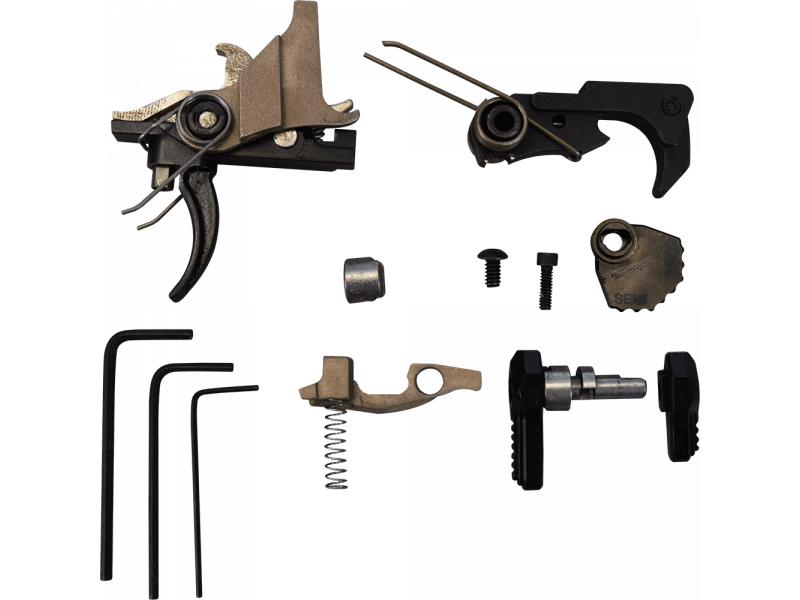
The factory trigger is a mil-spec-style unit with a small amount of take-up ahead of a heavy break and a loud reset. It is entirely adequate for targets inside 200 yards and limiting for precision group work. A quality single-stage drop-in runs $150 to $250 and is the single highest-value upgrade on this rifle.
How to Decide Between This and a Cheaper Carbine
Run through this checklist before you spend the money:
- Round count per year. Under 500 rounds annually, a mid-tier carbine will outlive you. Over 2,000, the cold hammer forged chrome-lined barrel and inspected bolt start to pay for themselves.
- Environment. Salt air, rain-heavy hunting seasons, and long vehicle storage favor the more corrosion-resistant finishes.
- Resale. Brand-name ARs hold value better on the used market. That difference can recover several hundred dollars if you sell in five years.
- Optic budget. A $1,700 rifle with a $90 optic is a poorly balanced system. Plan the glass before the gun. Our rifle field optics guide walks through magnification, reticle, and mount height decisions.
- Muzzle plans. The 1/2×28 threads accept most 5.56 muzzle devices and direct-thread suppressors. If a can is in your future, factor in that mounting hardware and read up on host compatibility in our suppressor buyer’s guide.
Ownership, Maintenance, and Storage
Chrome lining tolerates neglect better than nitride, but neither survives a wet rifle in a foam-lined case. Store the rifle muzzle-down in a dry cabinet, wipe the bolt tail and lugs after each session, and replace the extractor spring and gas rings around the 5,000 round mark as preventive maintenance rather than after a failure. A spare bolt kept in the range bag costs under $200 and eliminates the most common way an AR-15 ends a training day early. For transport, a hard case with a lockable latch satisfies most interstate travel requirements, and a dedicated desiccant pack is worth the few dollars. Configuration requirements vary by state, so confirm your local rules before altering stocks, grips, or magazines.
Who This Rifle Is For
Buy the DDM4 V7 if you want a 16 inch general-purpose 5.56 carbine that arrives correctly configured and needs nothing before it goes to work: 6.2 pounds bare, mid-length gas, free float rail, ambidextrous controls, and a barrel that will hold accuracy through a hard training schedule. Skip it if your realistic round count is low and you would rather put $700 of the difference into optics, a light, and ammunition. Both are defensible positions. Start by comparing complete AR-15 rifles against your actual annual round count, then build the support gear around whatever you choose.
What to Sort Out Before You Buy
Decide three things in order: how many rounds you will genuinely fire in a year, what optic the rifle will wear, and whether a suppressor is part of the plan. Those answers tell you whether the DDM4 V7’s build quality is an investment or an upcharge for your specific use. If the round count is high and the rifle has a job, the price makes sense.
FAQ
For high-volume shooters and anyone who wants a duty-grade 5.56 carbine with no immediate upgrades required, yes. The cold hammer forged 16 inch chrome-lined barrel, magnetic particle inspected bolt carrier group, mid-length gas system, and 15 inch free float rail are the features that separate it from carbines in the $800 to $1,100 band. Occasional shooters will see less return on the difference.
It uses a 1:7 twist, which stabilizes heavier bullets best. Expect better groups with 69 to 77 grain match loads than with 55 grain bulk ammunition. Keep 55 grain for volume practice and 69 grain or heavier for accuracy work and longer-range shooting.
The 5.56 barrel is threaded 1/2×28, the standard pitch for .223 and 5.56 rifles, and ships with an improved flash suppressor. That thread pitch accepts most aftermarket brakes, compensators, and direct-thread or quick-detach suppressor mounts.
The rifle weighs 6.2 pounds bare. A typical enclosed or open emitter red dot with mount adds about 0.5 to 0.8 pounds, a loaded 30 round magazine adds roughly one pound, and a weapon light with mount adds another 0.3 to 0.6 pounds. A realistic fighting weight lands near 8.5 pounds.
A quality single-stage trigger in the $150 to $250 range delivers the largest measurable improvement in group size. A grip change is the second, and it costs under $40 if the factory grip angle bothers your wrist.
Chrome-lined cold hammer forged 5.56 barrels commonly hold acceptable accuracy well past 10,000 rounds when shot at reasonable cadence. Sustained rapid fire shortens throat life considerably, so pace your strings during training and let the barrel cool between drills.
Was this useful?