
Brief
Four Months of Gun Gear Subscription Boxes, Graded
A spec-focused evaluation of firearm gear subscription boxes after four months, covering thread pitch, optic footprints, light candela, steel choices, and...
Shop this at BLVista
Gear subscription boxes sell a simple idea: pay a fixed amount each month, receive a mix of shooting accessories worth more than you paid. After four months of unboxing, the honest way to evaluate the model is not by retail sticker totals. It is by counting how many items survived contact with a rifle, a holster, or a range bag, and how many ended up in the drawer where cheap slings and mystery gun oil go to die.
This is a framework article. Use it to judge any recurring gear shipment, whether it arrives monthly or you assemble it yourself.
The only metric that matters is cost per mounted item
Add up four months of payments. Then count the items that are currently installed on a firearm, riding in a range bag you actually carry, or consumed during live fire. Divide. That number is your real cost per useful item, and it is usually two to four times higher than the advertised value of the box, because printed retail value assumes every item is something you needed.
A four-month sample typically breaks down into four buckets:
- Consumables such as cleaning solvent, patches, targets, and lubricant. Almost always usable. Low unit value, high hit rate.
- Mounting hardware such as M-LOK rail sections, QD sockets, sling swivels, and optic risers. Usable only if the spec matches your host gun.
- Soft goods such as slings, pouches, belts, and holsters. Fit dependent, and the failure rate here is the highest of any category.
- Signature items such as a light, a knife, an optic, or a magazine. This is the item that justifies the subscription, and its quality varies most.
Compatibility is where most of the value evaporates
Accessories only count as value if they fit. Before you judge a box, know the interface specs on your own guns.
- Muzzle threads. Most 5.56 AR-15 barrels use 1/2×28. Most .30 caliber rifles use 5/8×24. A brake shipped in the wrong pitch is decoration.
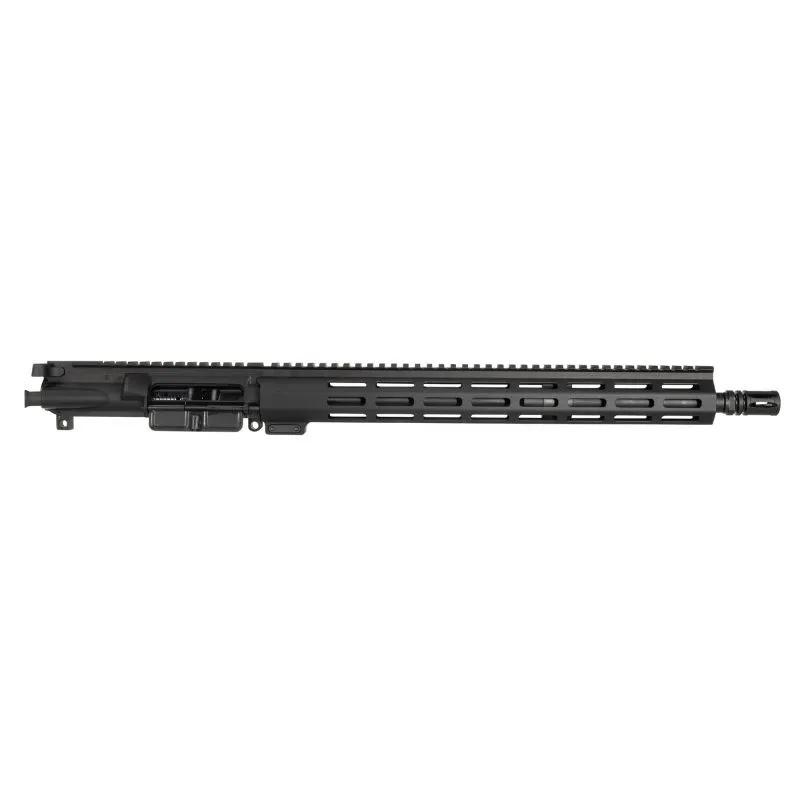
- Handguard attachment. M-LOK slots measure roughly 32mm long by 7mm wide on standard spacing. KeyMod hardware will not cross over. Picatinny to MIL-STD-1913 uses 0.206 inch slots on 0.394 inch centers.
- Optic footprint. A pistol red dot is only useful if the cut matches. Trijicon RMR, Shield RMSc, Holosun K series, and Aimpoint ACRO are not interchangeable. A slide cut for RMSc will not take an RMR without an adapter plate that adds height and another failure point.
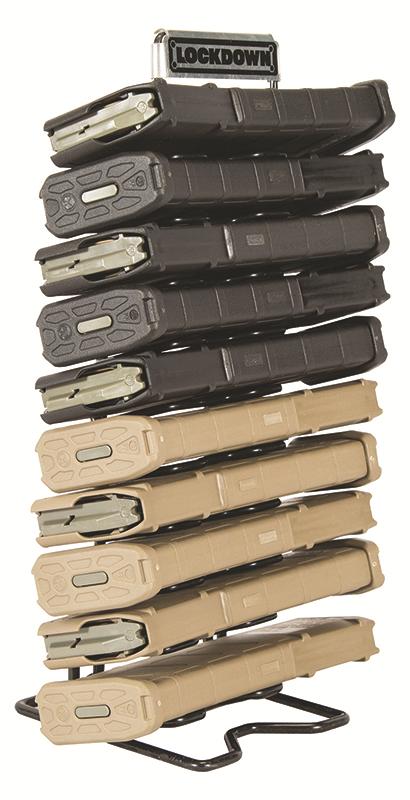
- Magazine fit. A 30-round STANAG-pattern AR magazine is close to universal. A 15-round double stack for a compact 9mm is not.
If you are shopping optics deliberately rather than by luck of the draw, our carry red dot buyer’s guide walks through footprints, window sizes, and dot intensity before you commit to a slide cut.
Grading the signature items by category
Weapon lights
Lumens are the number that gets printed. Candela is the number that matters for identification at distance. A 1,000 lumen light with 12,000 candela lights a hallway. A 600 lumen light with 20,000 candela reaches across a pasture. For a home defense carbine, look for a light that clears roughly 15,000 candela and mounts within reach of your support hand without crowding the muzzle.
Knives
Steel type tells you the ownership story. 8Cr13MoV and 440C sharpen easily and dull quickly. D2 and 154CM at 58 to 61 HRC hold an edge through field dressing and cardboard alike. S35VN and MagnaCut sit at the premium end. A subscription knife in budget steel is a glovebox knife, not a hunting knife.
Slings and soft goods
Two-point adjustable slings in 1.25 inch webbing carry lighter and slip under a pack strap. 1.5 inch webbing spreads load better on a 9 pound precision rifle. Check whether the included hardware is a QD swivel sized for a standard 10mm socket, because a sling with the wrong terminal end is a sling you will not run.
Ammunition and range consumables
When ammo shows up, note what it is. 55 grain M193 out of a 20 inch barrel runs near 3,240 fps and drops meaningfully from a 16 inch barrel. 62 grain M855 is a different zero. In 9mm, 115 grain runs around 1,150 fps, 124 grain +P near 1,200 fps, and 147 grain subsonic loads near 990 fps, which is the load you want if a suppressor is in your future. Mixed grain weights are fine for plinking and poor for confirming a zero.
What the boxes consistently miss
Four months in, the gaps were predictable. No torque wrench, and optic screws want a consistent 15 inch pounds on most T-10 and T-15 hardware. No thread locker rated for the job. No hearing protection above the entry tier, when a 16 inch 5.56 carbine puts out roughly 165 dB at the shooter and quality muffs or plugs run 22 to 33 NRR. No storage or transport solution, which is the item most new owners actually need for legal transport across state lines.
Those are the purchases worth making with intent rather than chance. Building a deliberate kit around a specific rifle is covered in our range and match loadout guide, and you can shop the categories directly through AR-15 accessories or weapon lights when you know the spec you need.
A five question checklist before you subscribe
- Do I own the host platform that most of these accessories are built for, in the correct thread pitch and rail standard?
- Would I buy the signature item at full price if I saw it on a shelf?
- Can I return or exchange items that do not fit, and what does that cost in shipping and time?
- Am I in a jurisdiction where certain contents cannot legally ship to my address, and does the seller screen for that?
- Over 12 months, is the total spend better applied to one optic, one light, or one suppressor I actually researched?
Question five is where most experienced shooters land. Twelve months of subscription spend generally buys a mid tier LPVO, a duty grade weapon light, or a meaningful down payment on a can. A 5.56 suppressor that trims roughly 28 to 32 dB off the report changes how you train. A random rail panel does not.
Who these boxes actually fit
New owners in the first year benefit most, because almost everything is new and the discovery value is real. Shooters with a single carbine, a single carry pistol, and a settled loadout get the least. Hunters get almost nothing, since the contents skew toward carbine and EDC rather than field optics, glassing gear, or cold weather layering.
Decide this before your next renewal
Pull four months of shipments onto a table and physically separate what is mounted from what is stored. If fewer than half the items made it onto a gun or into regular use, cancel and redirect that budget toward one specification-matched purchase you have already researched. If the hit rate is better than half and you enjoy the discovery, keep it running and treat it as entertainment with a gear dividend rather than a savings strategy.
FAQ
Only if you would have bought most of the contents anyway. Advertised retail value assumes full price on every item, including things that do not fit your guns. Calculate cost per item you actually install, and compare that against a single planned purchase.
Confirm muzzle thread pitch, usually 1/2×28 on 5.56 and 5/8×24 on .308, plus your handguard standard, M-LOK or Picatinny 1913. Those three details determine whether an accessory installs in five minutes or never.
It depends entirely on the model and the mount. Verify the optic footprint matches your slide or rail, torque the screws to the manufacturer specification, and confirm zero over at least 50 rounds before trusting it for defensive use.
For many shooters, yes. A quality 5.56 or .30 caliber can typically reduces the report by roughly 28 to 32 dB and improves training quality more than a year of small accessories. Our suppressor buyer’s guide covers mount types, thread pitch, and weight tradeoffs.
A calibrated torque wrench, quality hearing protection in the 22 to 33 NRR range, a lockable transport case, and a holster molded for your exact pistol and light combination. Buy those deliberately.
Was this useful?