
Brief
Firing Pin Channel Maintenance for Carry Pistols
Carbon fouling in the striker channel and on the breech face causes light strikes and erratic ejection. Inspection intervals, spring replacement, and...
Shop this at BLVista
 Corbon Self-Defense JHP Handgun Ammunition 9mm Luger +p 115 gr JHP 1350 fps 20/box
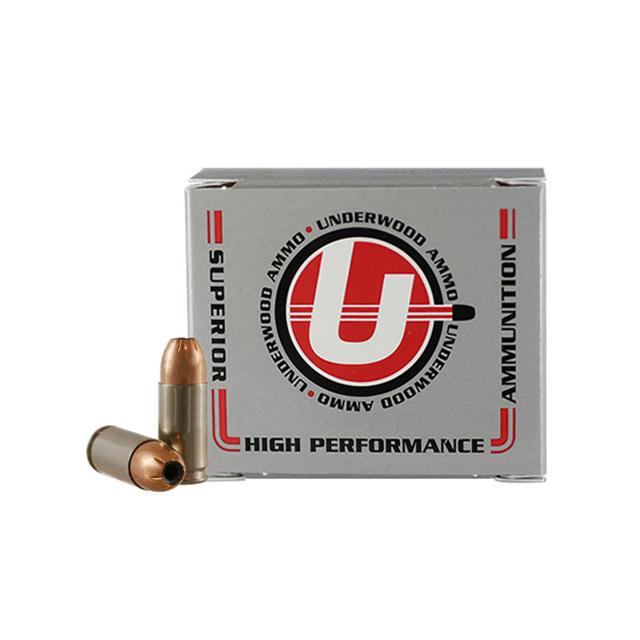 Underwood Hunting & Self Defense Handgun Ammunition 9mm Luger(+P) 147gr JHP 1125 fps 20/ct
 Hornady Monoflex Handgun Hunter Handgun Ammunition 9mm Luger 115 gr PT 1100 fps 25/ct
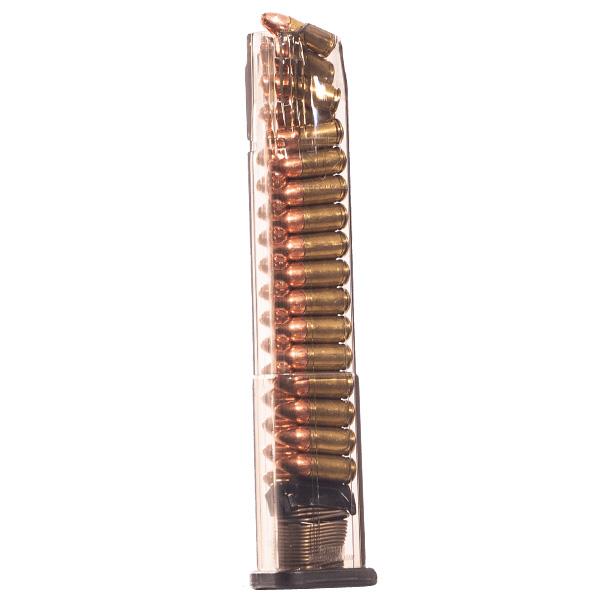 Elite Tactical Systems (ETS) Handgun Magazine Smith & Wesson M&P 9mm Luger Extended 30/rd
There is an ongoing argument in the industry about whether microscopic markings applied to a firing pin can survive normal use and keep transferring a readable impression onto a primer. Set the policy fight aside and look at what that debate actually confirms about your own gun: the firing pin tip, the striker channel, and the breech face are among the dirtiest, least inspected, and most consequential surfaces on a defensive handgun. Carbon builds there, it changes dimensions, and it changes how the gun behaves under a timer or under stress.
If a laser engraved pattern measured in microns gets filled in by combustion residue after a few hundred rounds, so does the far coarser geometry that determines primer strike depth, extractor grip, and case head support. That is the maintenance lesson worth taking from all of it.
What Actually Fouls, and Why It Matters
Every round you fire pushes a small volume of combustion gas back past the case rim and into the breech face area. On a Glock 19 Gen5 with a 4.02 inch barrel and 15+1 capacity, that gas has a direct path to the firing pin hole. Over time you get three distinct problems:
- Carbon ring around the firing pin hole. A raised crust on the breech face reduces effective firing pin protrusion, because the case head can no longer sit flush. Light strikes usually show up first with harder primers.
- Channel packing. Carbon plus oil turns into a paste inside the striker channel. That paste slows striker travel and steals energy from the strike. This is the reason most manufacturers tell you to run the striker channel dry.
- Extractor claw and channel buildup. Residue under the extractor claw changes how much of the rim it captures, which shows up as erratic ejection patterns long before it shows up as a failure to extract.
None of this is exotic. It is the predictable result of firing several thousand rounds of 9mm through a pistol that never gets more than a bore snake and a wipe down.
Ammunition Choice Changes the Fouling Curve
Two shooters can put the same round count through identical pistols and see very different internals. The variables that matter:
- Powder burn rate and charge weight. A 147 grain 9mm subsonic loaded near 1,000 fps generally leaves a different residue signature than a 115 grain load running around 1,180 fps from a 4 inch barrel. Heavier, slower loads with fuller cases tend to run cleaner at the breech in many pistols.
- Primer hardness. Commercial small pistol primers such as CCI 500 ignite reliably with less strike energy than the harder CCI 34 style primers used in some military and imported surplus ammunition. A pistol with a fouled channel can run fine on soft primers and produce light strikes on hard ones.
- Pressure level. A 124 grain +P defensive load pushed past 1,200 fps increases gas volume at the breech compared with a standard pressure 124 grain load near 1,150 fps.
- Case sealant. Sealed primers and case mouths, common on duty and defensive ammunition, reduce moisture intrusion during long carry cycles but do not reduce carbon.
Practical takeaway: train with the pressure class you carry, then inspect. If your carry load is a 124 grain +P and you practice exclusively with 115 grain range ammunition, you have not validated your gun against the load that matters.
An Inspection Interval That Holds Up in the Field
Round count is a rough proxy, and environment matters more than most people admit. A pistol carried appendix through a humid Gulf Coast summer accumulates lint and salt faster than a range gun that lives in a safe. Use this as a baseline and tighten it if you carry daily.
- Every range session: field strip, clean the breech face, wipe the extractor claw, run a patch through the bore, light oil on rails and barrel bearing surfaces only.
- Every 500 to 1,000 rounds: pull the slide plate, remove the striker assembly, degrease the channel completely, reassemble dry. Inspect the firing pin tip for chipping, mushrooming, or a carbon crust.
- Every 2,500 to 3,000 rounds: inspect the extractor spring and the striker spring for set. Look at the locking block and barrel lugs for peening.
- Around 5,000 rounds: replace the recoil spring assembly on compact 9mm duty designs, consistent with commonly published armorer guidance. Subcompacts with shorter, faster slide cycles benefit from a shorter interval.
- Annually for a carried gun: replace the carry ammunition that has been repeatedly chambered, and measure firing pin protrusion against the manufacturer’s published specification with a gauge rather than by eye.
Do not repeatedly chamber the same round. Setback on a 9mm cartridge raises pressure quickly, and the bullet you have chambered fifteen times is not the bullet you tested. Rotate through the magazine.
Solvents, Lubricants, and What Not To Do
The striker channel is the one place on most modern pistols where oil is a liability. Use a non residue aerosol degreaser or a dedicated brush and dry patches, then leave it dry. Rails, barrel hood, barrel lug, and the outside of the barrel get a thin film of oil. Grease works on locking surfaces in high round count guns but attracts more debris in a concealed carry environment.
Ultrasonic cleaning is efficient on slides and small parts, but it strips every trace of lubricant. Anything that comes out of an ultrasonic bath must be dried and re oiled before it goes back into service. A basic bench setup with a nylon breech face brush, pin punches, and quality solvent handles most of this. If you are building that kit, start with a pistol cleaning kit matched to your caliber rather than a generic universal set.
Springs, Wear Parts, and Ownership Cost
Springs are the cheapest insurance on a defensive handgun. A striker spring, extractor spring, and recoil spring assembly together typically land in the $30 to $70 range depending on platform, which is a fraction of one training class. Keeping a spare set in your range bag means a spring failure costs you five minutes instead of a canceled weekend. Shop striker and recoil springs by exact model, since generation changes matter. A Gen5 Glock 19 does not share every internal with a Gen3, and a 43X with a 3.41 inch barrel and 10+1 capacity runs a different recoil assembly than its full size siblings.
Optic Cut Slides Add a Second Maintenance Path
Once you cut a slide for a red dot, you introduce a mounting interface that lives directly in the gas stream. Carbon migrates under the optic body and around the mounting hardware. Plan on removing the optic annually, cleaning the pocket, and reinstalling with fresh thread locker at the torque value the optic maker publishes, commonly in the 12 to 20 inch pound range for micro red dots. Confirm zero afterward at 25 yards. If you are still deciding on footprint and mounting approach, the carry red dot buyer’s guide walks through RMR, RMSc, and Shield footprint compatibility before you commit to a slide cut.
Storage, Transport, and Environmental Exposure
Long term storage is where neglected fouling turns into corrosion. Carbon is hygroscopic, meaning it holds moisture against steel. A pistol stored dirty in a closed safe at 60 percent relative humidity will pit around the breech face and firing pin hole. Keep safe humidity in the 30 to 50 percent range with desiccant or a rod dehumidifier, and never store a firearm in a closed foam lined case for months at a time. Foam traps moisture against the finish.
For travel, a lockable hard sided case with the firearm unloaded and ammunition packed separately is the baseline standard, and rules vary by destination, so confirm before you go. Salt air, hunting season rain, and sub freezing temperatures all argue for a dry striker channel and a light oil film rather than a heavy one. Thick oil at 10 degrees Fahrenheit slows a striker measurably.
A Simple Decision Checklist Before You Carry It Again
- Does the breech face wipe clean to bare metal around the firing pin hole?
- Does the firing pin tip look uniform and undamaged under magnification?
- Is the striker channel dry, with no oil sheen?
- Does the extractor claw have full, unobstructed contact with a case rim?
- Have you fired at least 50 rounds of your actual carry load through the gun since the last parts change?
- Are the magazine springs and followers clean and free of lint?
Answer all six with a yes and the gun goes back on your belt. Miss one and it goes back on the bench. That framework, applied consistently, prevents most of the failures people blame on ammunition. For a broader look at how maintenance fits alongside holster selection, load choice, and dry practice, see the concealed carry readiness guide.
What To Do This Week
Pick a date, strip your carry pistol down past field strip, and degrease the striker channel. Order a spare spring set for your specific generation and model while you are at it. Then shoot 50 rounds of your carry load and confirm the gun runs clean before it goes back into daily rotation. The gun that has never been inspected below the slide plate is the gun most likely to surprise you.
Was this useful?