
Brief
How Cerakote Holds Up on a Rusted Carry Pistol
What a ceramic firearm coating fixes on a rusted carry gun, cure temperatures, film thickness, prep standards, and how it compares to nitride and bluing.
Shop this at BLVista
Sweat is the most consistent enemy a carry gun faces. A pistol riding inside the waistband for eight to ten hours a day sits against skin at roughly 90 degrees in a salt bath, then goes into a safe overnight without drying. Factory bluing gives up first, usually along the slide flats and the muzzle crown. Nitride holds longer. Nothing survives neglect forever. That is the point where most owners start pricing a refinish, and where ceramic polymer coatings like Cerakote enter the conversation.
What follows is not a sales pitch for a finish. It is a framework for deciding whether a refinish is the right money, what specifications to ask about before handing over a firearm, and how the finished product behaves after a few thousand rounds and a couple of hunting seasons.
What the coating actually is
Cerakote is a ceramic filled polymer sprayed on in a very thin film. The oven cured H-Series is typically applied at about 0.5 to 1 mil, roughly 12 to 25 microns, then cured near 250 degrees Fahrenheit for about an hour. The air cure C-Series is the high temperature product used on suppressor tubes, barrels, and gas systems, rated well past the point where a polymer topcoat would burn off. Those two numbers matter more than color choice:
- Film thickness. One mil on each mating surface means two mils of added interference where a slide meets rails. On a tight 1911 or a match grade bolt, that is enough to change fit. Good shops mask or thin the film on bearing surfaces.
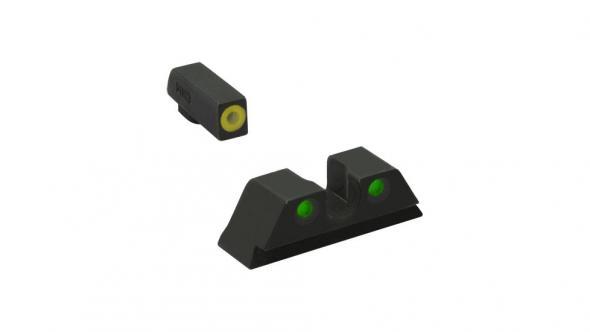
- Cure temperature. A 250 degree bake is harmless to steel and aluminum but destructive to polymer frames, night sight vials with tritium, and adhesives inside optics. Those parts either get air cure product or come off the gun entirely.
Prep is the whole job
Coating failure almost always traces to surface preparation, not the product. The sequence a competent shop follows looks like this: complete disassembly to bare parts, solvent degrease, abrasive blast with aluminum oxide in the 100 to 120 grit range at moderate pressure to create a mechanical profile, second degrease, then spray within a short window before the freshly blasted steel starts to flash rust.
Existing rust changes the math. Surface oxidation blasts off. Pitting does not. On a slide with pitting deeper than a few thousandths, the coating will bridge the low spots and the texture stays visible under the color. You are buying corrosion protection at that point, not cosmetics. Decide which one you are actually paying for before the quote is written.
Comparing your realistic options
- Hot salt bluing. Traditional, thin enough to be dimensionally irrelevant, and the least corrosion resistant of the group. Best on collector grade guns where originality carries value.
- Nitride or QPQ. A surface conversion rather than a coating, so it adds essentially no thickness and hardens the substrate. It requires stripping to bare metal and works on steel only. Color options are basically black.
- Hard anodizing. Aluminum only. Excellent for receivers and handguards, irrelevant for a steel slide.
- Ceramic polymer coating. Works on steel, aluminum, stainless, titanium, and polymer. Adds a measurable film. Wide color and pattern range. Repairable in sections without redoing the entire firearm.
For a working carry gun that lives against a body, the coating wins on corrosion resistance per dollar. For a bolt gun that needs a specific chamber and bore dimension held to the ten thousandth, keep coating out of the critical areas entirely.
Three projects worth thinking about
The rusted compact carry pistol. Think of a 9mm with a 4.0 inch barrel, 15+1 capacity, and about 21 ounces empty. This is the classic candidate. Strip the slide, coat it, leave the polymer frame factory or coat it with the air cure product. Reinstall sights after cure. Expect holster wear to show at the muzzle end of the slide and along the leading edge of the ejection port within a year of daily draws.
The 16 inch carbine. Mixed component finishes are the real problem here, not durability. An anodized receiver, a phosphate barrel, and a nitride bolt carrier photograph as three different blacks. Coating the exterior in one color solves that. Keep the bolt, extractor, cam pin, and gas rings uncoated so headspace and gas system clearances stay factory.
The suppressor host. A .30 caliber can threaded 5/8×24, or a 9mm mount at 1/2×28, sees temperatures no oven cured coating will tolerate. High temperature air cure product on the tube and mount, standard product on the host receiver. If you are still deciding on a can, our suppressor buyer’s guide covers mount standards and thread pitch matching before you commit to a finish plan.
Ownership after the spray booth
A cured ceramic coating is chemically tolerant. Standard bore solvents, CLP, and copper removers will not lift it. Ammonia heavy cleaners and aggressive paint strippers will. Clean it like any other firearm and skip the abrasive pads.
Holster interaction is the real wear driver. Kydex with embedded grit acts like fine sandpaper on any finish. Wipe the inside of the shell monthly. Leather that has absorbed sweat will hold moisture against a slide even through a coating, and any bare interior surface underneath is still steel.
Plan on a functional check before the gun goes back into rotation: 50 rounds minimum, magazine seating and drop, extractor tension, and a slide velocity check with your normal carry load, whether that is a 115 grain at roughly 1150 feet per second or a 147 grain subsonic near 990. Coating inside a magazine well or on a rail can change how the gun runs, and you want to find that on a range trip rather than under stress. If you are rebuilding a carry setup from scratch, the concealed carry readiness guide walks through the rest of that checklist, and you can compare IWB holsters that will not chew a fresh finish.
A five question check before you pay
- Is the damage cosmetic surface rust or measurable pitting?
- Which parts must stay uncoated to preserve fit, headspace, or gas clearance?
- Does any part of this project see sustained heat above what an oven cured film tolerates?
- Do sights, optics, or tritium vials need to come off before the bake?
- Does the total cost approach the price of replacing the part outright, such as a factory slide or barrel?
That last question ends more projects than it starts, and it should. Refinishing earns its keep on guns with sentimental value, discontinued models, and complete rifles where uniform appearance and corrosion resistance are worth real money. On a common production pistol with a pitted slide, a replacement assembly is sometimes the cheaper and more honest fix.
Decide what you are buying
Pick one primary goal and buy toward it. If the goal is corrosion resistance for a gun that sweats every day, a thin ceramic coating on a properly blasted slide is a sound investment. If the goal is appearance on a firearm with deep pitting, understand that the texture will telegraph through and set expectations accordingly. If the goal is precision, keep coating away from anything that controls fit. Browse firearm accessories and maintenance gear once your project comes back, because a good finish still needs a clean holster and a disciplined wipe down to last.
FAQ
With proper prep and a film in the 0.5 to 1 mil range, expect several years of daily carry before meaningful wear. High contact points such as the muzzle end of the slide and the ejection port edge will show first. Touch up work on a single panel is possible without refinishing the whole gun.
Only if it is applied where it does not belong. Coating inside a chamber, on bolt lugs, on a barrel extension, or on slide rails changes clearances. A shop that masks bearing surfaces and leaves the bolt and gas system alone will not change how the gun shoots.
Yes, using the air cure product rather than the oven cured version. Polymer frames should never see a 250 degree bake. Confirm which product the shop plans to use on the frame before work begins.
Only high temperature air cure product on the tube and mount. Standard coatings will discolor or burn off. Match your thread pitch first, commonly 1/2×28 for 5.56 and 9mm hosts and 5/8×24 for .30 caliber, then plan the finish around the heat the can will actually see.
They solve different problems. Nitride hardens the steel itself and adds no thickness, which suits barrels and bolt carriers. Ceramic coating adds corrosion protection and color to almost any material and can be repaired locally. Many well built firearms use both on different parts.
Standard bore solvents, CLP, and copper removers are safe on a fully cured finish. Avoid ammonia heavy cleaners, paint strippers, and abrasive pads. Wipe the interior of your holster regularly, since embedded grit does more damage than any solvent.
Was this useful?