
Brief
Osight SE Green Multi-Reticle: What the Specs Mean for Real-World CCW Use
Practical evaluation of the Osight SE Green Multi-Reticle pistol optic: green reticle choices, RMSc fitment, battery tray, waterproofing, durability, and...
Shop this at BLVista
Start here
Carry Red Dot Guide
Read the guideUse this as the evergreen parent for micro-dot buying questions so individual optic reviews reinforce one durable carry optics page.
Use the evergreen guide first, then come back to this article for the narrower case or product angle.
Green dots keep gaining ground in the concealed-carry optic space for one simple reason: more shooters can see them clearly, more of the time. That is especially true for anyone who struggles with astigmatism, bloom, or starburst. A crisp aiming point beats a bright one every day of the week.
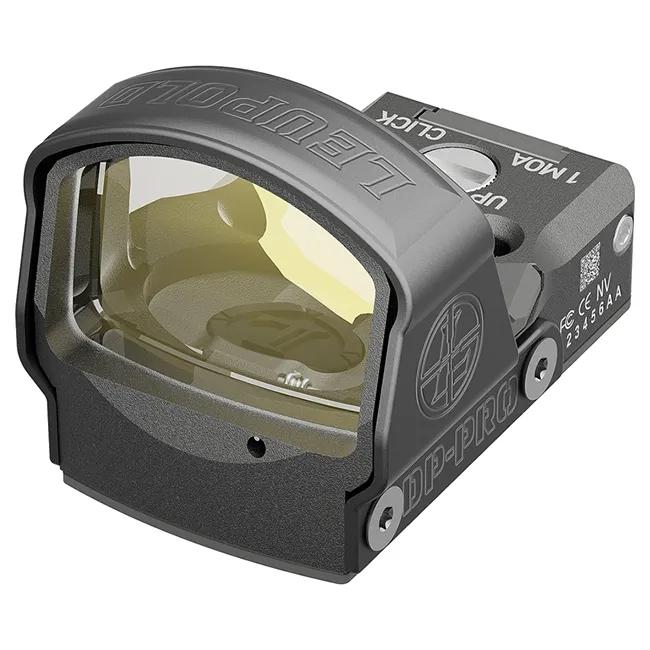
The Osight SE Green Multi-Reticle takes that idea a step further by pairing a green emitter with a selectable reticle system. On paper, it is a straightforward update to the Osight SE pattern, but the details matter if this is going on a defensive pistol you actually carry.
Osight SE Green Multi-Reticle: Key Specs
- Magnification: 1x
- Reticle: 2 MOA dot, 32 MOA ring, or dot plus ring
- Brightness settings: 8 daylight, 2 night vision
- Window: 0.83 in x 0.55 in
- Footprint: RMSc
- Battery: CR1620 (side-loading tray)
- Weight: 1 oz
- Water rating: IPX7
- Country of origin: China
- MSRP: $219.99 (often priced lower at launch)
Why green can be the better choice in bright, real outdoor light
Green often looks sharper than red in hard midday sun, on pale dirt, and around warm-toned backgrounds. That is common in desert terrain, dry grass, and many urban environments where tan, brick, and sun-baked concrete dominate. In greener environments, a red dot can stand out better against foliage. Neither color wins everywhere, which is why your typical lighting matters more than internet arguments.
If you are trying to solve an astigmatism problem, treat color as only one piece of the puzzle. Emitter quality, brightness discipline, and reticle choice can matter more than the color itself. A lot of “my dot looks like a comma” issues come from running the optic brighter than needed. Start there before you assume you need a different emitter.
Multi-reticle: when the ring helps and when it slows you down
The Osight SE Green Multi-Reticle gives you three usable setups: a 2 MOA dot, a 32 MOA ring, or dot plus ring. Each has a job, and it is worth picking one and training with it instead of constantly switching.
2 MOA dot
Use the dot when you want a clean sight picture at distance, or when you are doing deliberate practice where shot accountability matters. At 15 to 25 yards, the dot keeps the target less obstructed. For tight groups, this is the simplest option.
32 MOA ring
The ring can speed up close-range acquisition because your eye catches the circle even if your presentation is slightly off. It can also help during recoil because the ring gives you more reference to track. The tradeoff is visual clutter and a higher chance of chasing the reticle instead of building a repeatable draw and index.
Dot plus ring
This is the common compromise for defensive shooting. The dot gives you a precise aiming point while the ring helps your eye find the optic window. The tradeoff shows up in low light when reflections, rain, or a dirty window add artifacts. More reticle elements can mean more distraction.
Practical framework: pick the reticle that supports your weakest skill. If your draw to first shot is inconsistent, start with dot plus ring while you build a repeatable index. If your draw is solid and you are pushing accuracy standards, live on the dot. If you are running close-range drills and want the fastest feedback, test the ring only. Then commit for a few thousand reps.
Side-loading CR1620 battery: ownership reality for a carry optic
Battery access matters because it dictates whether you keep your zero. A side-loading tray lets you replace a CR1620 without removing the optic. That is a real advantage for concealed carry, where you want a predictable maintenance routine and you do not want to re-torque screws and re-verify zero every time the battery gets swapped.
Osight advertises a very long runtime and includes a low battery warning behavior. Take any runtime claim as an estimate that depends on brightness setting, how often motion activation wakes the optic, and how you store the pistol. If you carry daily, set a battery replacement interval that fits your risk tolerance instead of waiting for warnings.
Simple schedule that works: replace the battery every 6 to 12 months, confirm zero after replacement, and keep a spare CR1620 in your range bag and in your home support kit. If this is a duty or primary home defense gun, shorten the interval.
Auto-shutoff and motion activation: convenience with a training check
The optic includes an auto-shutoff feature and motion activation. That can preserve battery life for a carry pistol that spends long hours holstered. The training check is simple: confirm the dot is on during your normal draw speed from concealment. Do this dry in safe conditions, then verify it live on the range. If your draw does not reliably wake the optic, you have found a problem you need to solve before trusting it.
Also test your storage reality. A pistol that rides in a vehicle, a nightstand, or a pack can experience small movements that wake the optic more often than you expect. If you rely on motion activation, you should understand your real battery consumption pattern over months, not days.
RMSc footprint and fitment: where buyers get tripped up
The Osight SE Green Multi-Reticle uses the RMSc footprint. That can be a great match for many micro-compact and slimline pistols, but fitment details decide whether this is easy or annoying.
- Slide cut compatibility: confirm your slide is cut for RMSc and whether it uses recoil lugs that match the optic body. Some slides need specific screw lengths and thread pitches.
- Adapter plates: if your pistol is cut for RMR, you may need an adapter plate. Plates add height, which can affect concealment, backup iron sight height, and your ability to co-witness.
- Iron sights: decide if you want a lower-third co-witness, a full co-witness, or no co-witness. Then select suppressor-height sights accordingly. Verify sight picture with the optic installed.
When you use an adapter plate, treat torque and threadlocker as part of the system. Follow the optic and plate manufacturer specs, use a calibrated torque driver, and let threadlocker cure before live fire. A carry optic that backs out under recoil is a preventable problem.
Durability and IPX7: what it covers and what it does not
An IPX7 rating means the optic is designed to handle temporary water immersion under controlled conditions. That is useful for rain, sweat, and incidental drops into water. It does not tell you anything about impact resistance, long-term corrosion control, lens coating durability, or how well the controls hold up to grit and pocket lint.
For a concealed carry optic, durability shows up in boring places:
- Lens and emitter area: how often it needs cleaning and how badly it smears when oily
- Housing edges: how it survives daily holster wear and belt contact
- Adjustment screws: whether clicks are consistent and hold zero after recoil cycles
- Battery tray seal: whether it stays watertight after repeated battery changes
If you run optics in dusty ranges, wet hunting camps, or high-sweat summer carry, plan for a simple maintenance loop: wipe the window, check mounting screws, confirm brightness setting, and do a quick confirmation drill at the start of each range session.
Window size and draw mechanics: the part that decides your speed
The window size is on the compact side, which is normal for RMSc class optics. Smaller windows carry well and tend to snag less, but they punish sloppy presentation. The way to make a small-window optic feel “fast” is not to hunt for the dot. It is to build a repeatable index so the dot is already there.
Range test: at 3 to 7 yards, run controlled draws to a single A-zone hit. If you lose the dot, freeze the gun in place and adjust your wrist angle slightly until the dot appears. That adjustment tells you what your grip and presentation are doing. Fix the draw, not the optic.
Price positioning: what you should expect at this tier
At roughly the low-to-mid $200 MSRP range, you are buying features and convenience. You still need to validate reliability with your pistol, your ammo, and your carry method. If you are building a budget-conscious CCW setup, this category can make sense if you commit to a routine: correct mounting, periodic screw checks, battery schedule, and live-fire verification.
Before you buy, run a quick checklist:
- Fitment: RMSc direct mount or plate required
- Carry priority: lowest profile vs larger window
- Reticle plan: choose one reticle and train for consistency
- Maintenance plan: battery interval, screw torque checks, lens cleaning
- Backup plan: iron sight height and co-witness preference
Related reading
For the broader picture, start with Carry Red Dot Guide.
- Carry Red Dot Guide – Use this as the evergreen parent for micro-dot buying questions so individual optic reviews reinforce one durable carry optics page.
- Steiner MPS-C Review: Compact Enclosed-Emitter Dot for RMSc Carry Guns
- Vortex Defender-CCW Enclosed on RMSc Pistols: Real-World Reliability for Daily Carry
Shop related gear
- Red Dot Sights – Compare footprint, window size, enclosure, and carry-focused durability in one place.
- Scope & Sight Mounting – Mounting hardware and setup tools for getting optics aligned correctly the first time.
- Reptilia ROF-90 Mount FDE – A concrete mount option for ACRO and Steiner MPS pattern optics on 34mm tubes.
- Reptilia ROF-90 Mount Black – The same ACRO and Steiner MPS fit in a black finish for 34mm tube setups.
FAQ
Green can look sharper for many shooters with astigmatism, but results vary. Reticle clarity depends on emitter quality, your prescription, and brightness setting. Lower brightness to the minimum usable level for your lighting.
A 2 MOA dot supports precise aiming and a cleaner view of the target. A 32 MOA ring can speed up acquisition at close range. Dot plus ring balances speed and precision for defensive shooting.
Yes. Confirm your slide cut is RMSc and verify the correct screw length and thread pitch for your pistol. Using an adapter plate adds height and can change iron sight and holster fit.
A 6 to 12 month replacement interval is a practical baseline for concealed carry. For a primary defensive pistol, shorten the interval and confirm zero after replacement.
IPX7 covers exposure to rain, sweat, and brief submersion under test conditions. It does not guarantee impact resistance, long-term corrosion control, or durability of adjustment mechanisms.
It often will, but you must verify with your draw speed and carry setup. Test during dry practice and confirm with live fire. Reliability during presentation is a requirement for carry.
Pick the reticle that supports your weakest skill. Dot plus ring helps with faster acquisition while building a consistent index. Dot-only favors precision. Ring-only can support close-range speed work and tracking.
Was this useful?