
Brief
Building a Dry Fire Plan That Holds a Sub-Second Draw
A structured dry fire program built on motor learning research, with rep schemes, par times, laser trainer and holster selection criteria, and cold draw...
Shop this at BLVista
Most shooters treat dry fire as a volume problem. Do more reps, get faster. That works up to a point, and then it stalls. The reason is that a draw stroke is a motor program, and motor programs are built, stored, and recalled by the nervous system according to rules that have very little to do with how many times you yanked a pistol out of a holster while watching television.
If you have ever pushed a draw to first shot down near one second and then watched it drift back to 1.4 or 1.7 after a month of travel, illness, or a busy work stretch, you already understand the problem. The skill did not disappear. The retrieval path got weak. Structuring practice around how skills are stored and recalled is what separates a training plan from a rep count.
Why draw speed decays and what actually holds it
Motor learning research draws a clear line between skill acquisition and skill retention. Practicing one task over and over in a fixed pattern builds speed quickly. That same fixed pattern produces poor retention days later and poor transfer when conditions change. Practicing several related variations in unpredictable order feels worse in the moment and produces slower short term gains, and it holds far better a week out.
That single finding should change how you build a session. If your dry fire consists of 100 identical draws from a static square stance, you are optimizing for the version of you that is standing in your living room, not the version standing at an awkward angle with a cover garment fighting you.
The performance standard worth chasing is concrete. A full size competition metric target has an A zone measuring roughly 6 inches wide by 11 inches tall. Draw to a hit in that zone at 7 yards in 1.20 seconds from concealment is a serious benchmark. Doing it cold, on the first attempt of the day with no warm up, is a different and much harder standard. Cold performance is the only number that predicts anything about a real event.
The gear that makes a session measurable
You cannot manage what you do not measure, and a stopwatch app does not cut it. Three items carry the load.
A shot timer or par time device. A dedicated timer gives you par beeps, split tracking, and repeatable start signals. Quality units run in the roughly 120 to 200 dollar band. Set a par time 0.10 seconds under your current average and work against the beep rather than your own perception of speed. Perception lies. A shot timer does not.
A laser training pistol or laser insert. Purpose built laser trainers in the 150 to 250 dollar range remove ammunition from the equation entirely and give you hit feedback, which a dry press cannot. The key specification is fit. A training pistol needs to match the frame dimensions and holster fitment of your carry gun closely enough that your draw index does not change. If you carry a striker fired compact with a 4 inch barrel, training on a full size frame teaches a grip that will not repeat under stress. Browse dry fire laser training tools with fitment as the first filter, not price.
Reduced scale targets. Interior spaces are short. A one third scale target at 10 feet subtends about the same visual angle as a full size target at 30 feet, which lets you train realistic sight pictures in a hallway. Print a set, mount them at actual shoulder height, and stop practicing at chest level on a doorframe.
Support gear matters as well. Weighted dummy magazines make reload practice honest. A brick or masonry backstop behind your target area is a discipline worth keeping even in dry fire. Ammunition stays in a different room, full stop.
A 45 minute session with six phases
The following structure borrows directly from how athletes in other disciplines organize practice, and it maps cleanly onto shooting.
- Raise your heart rate first. Six minutes at roughly 75 percent of max heart rate before motor practice. Kettlebell work, sled pushes, or an assault bike all work. Published work on exercise and motor memory consolidation suggests improvements on the order of 10 percent when exertion brackets the practice session. You should be breathing hard and still steady on your feet, not shaking.
- Blocked practice, 35 reps. A 10-10-10-5 progression works well. Ten reps slow and technically perfect. Ten reps faster but comfortable. Ten reps at your current speed ceiling without error. Five reps at absolute redline where failure is expected. If you never miss on those last five, you are rehearsing rather than learning. Roughly 15 percent of total reps should live at the failure edge.
- Random practice, 30 reps. Rotate unpredictably between three drills built around the same core skill. Draw and fire six into the A zone. Lateral step while drawing, one shot. Draw, two shots, reload, two shots. Randomize with colored cards, a partner calling drills, or an app that cues you. Each unpredictable cue forces your brain to reload the motor program from storage, which is exactly the retrieval practice that produces durable skill.
- Inhibitory control work. Shoot and no shoot cues, ideally something that requires processing rather than pattern matching. Simple arithmetic on a screen, shape recognition, or three color cues where one means draw to low ready and hold. Restraint is a trained skill, and for anyone carrying a defensive handgun it carries more legal weight than speed does.
- Light aerobic work after. Fifteen to 20 minutes at about 60 percent of max heart rate. A jog, a light lift, a pickup game. Exercise on both sides of motor practice appears to help consolidation more than either side alone.
- Down regulate. Five minutes of box breathing at a four second inhale, four second hold, four second exhale, four second hold. Lowering cortisol before you walk away supports memory formation rather than leaving your nervous system spun up.
Sleep is the phase most people skip and the one that matters most. Aim to sleep within about six hours of training, and protect a full eight hour cycle. A substantial share of motor consolidation happens in the back half of that cycle. Chronic five hour nights will flatten your gains no matter how well the rest of the plan is built.
Match the blocked to random ratio to your actual level
The mix changes as competence grows. Beginners need repetition to build the base pattern. Advanced shooters need interference to keep the pattern accessible.
- New shooter: 80 percent blocked, 20 percent random
- Intermediate: 50 percent blocked, 50 percent random
- Advanced: 20 percent blocked, 80 percent random
An honest self assessment matters here. If your grip is still inconsistent rep to rep, you are a beginner on that skill regardless of how many rounds you have fired.
Holster retention changes the math
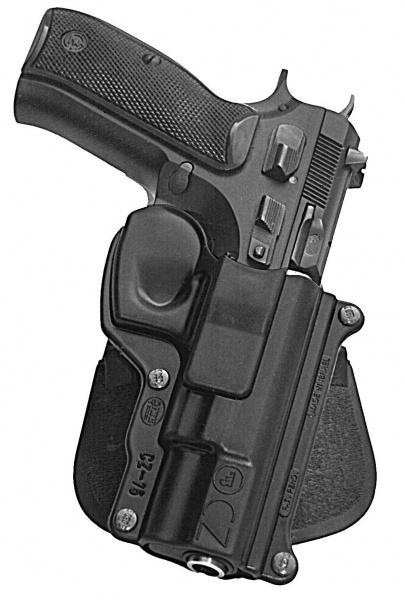
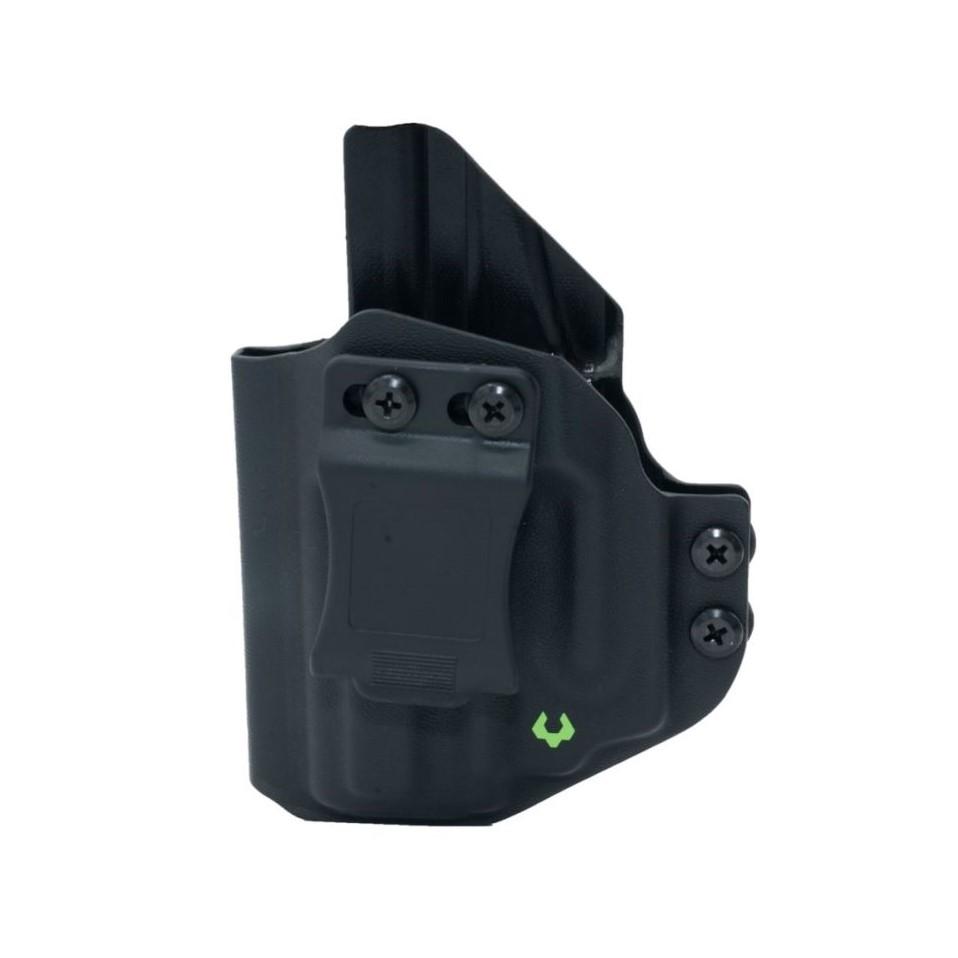
Switching platforms resets your times, and retention level is the biggest single variable. An open top appendix rig with a friction fit produces the fastest draws available to a concealed carrier. A duty holster with an active thumb release and a hood adds a mechanical step, and that step costs measurable time until the release becomes automatic. Expect your first shot times to regress noticeably when you change retention levels, then rebuild.
Practical selection points when you evaluate a retention holster:
- Retention level should match your actual environment. Level II and III systems make sense for open carry, uniformed work, and hunting where a fall or brush contact could dislodge a pistol. Concealment carriers rarely need more than a well fitted friction shell.
- Confirm optic and light clearance. A holster cut for a bare slide will not clear a red dot or a weapon light, and forcing it damages both.
- Check screw torque monthly. Kydex hardware backs out with repeated draw cycles, and a loose retention screw quietly changes your draw feel.
- Belt compatibility matters more than the holster. A 1.5 inch reinforced gun belt keeps the holster from rotating and preserves your draw index.
Environmental exposure is real. Salt sweat, sunscreen, and fine dust all accelerate wear on retention surfaces and pistol finishes. Wipe the inside of a holster shell after humid summer carry, and inspect polymer for stress cracks at the mounting points twice a year. If you carry daily, consider a holster a two to four year consumable rather than a lifetime purchase. Our concealed carry readiness guide covers how holster, belt, and garment choices interact over a full year of daily wear.
Ownership and logistics people forget
Laser training pistols and dry fire tools have their own maintenance profile. Emitters drift out of alignment if the unit gets dropped repeatedly on hard flooring, so verify zero against a fixed reference monthly. Keep the training pistol stored separately from live firearms and clearly marked so there is never ambiguity in the room. When traveling, a training pistol in a checked bag can draw questions from screeners even though it is not a firearm, so pack it visibly and be ready to explain it.
Live fire remains the test. Dry fire builds the mechanics, and a range session verifies that recoil, sight tracking, and trigger management survived the transfer. Plan one live confirmation session for every four to six dry sessions, and score it against the same A zone standard you use at home. Ammunition selection, magazine count, and target setup for those confirmation sessions are covered in our range and match loadout guide.
A four question check before you buy training gear
- Does it produce a number I can compare week to week? If not, it is a toy.
- Does it fit the exact pistol, holster, and optic footprint I actually carry?
- Will it survive 5,000 draw cycles and a few drops on tile?
- Does it let me train unpredictability, or only repetition?
Gear that clears all four is worth the money. Gear that clears two will sit in a drawer by month three.
Decide your next 30 days
Pick one measurable skill and one standard. Draw to an A zone hit at 7 yards in 1.20 seconds cold is a good place to start. Record your current cold time before you change anything, then run three sessions a week for four weeks using the phase structure above. Keep a simple log of cold time, best time, and hours of sleep. At the end of the month you will know whether the structure works for you, and you will have a number instead of a feeling. Set up the timer and laser trainer first, because everything else in the plan depends on being able to measure the result.
FAQ
Forty five minutes covers a full structured session including exercise bookends and breathing work. With only 15 minutes, run 35 blocked reps and 15 random reps. Three to four sessions per week produces measurable draw time improvement within two weeks for most shooters.
A cleared firearm works for draw and trigger mechanics. A laser trainer adds hit feedback and removes live ammunition from the training space. Units commonly run 150 to 250 dollars. Match the frame size and holster fitment to your carry gun so the draw index stays identical.
Draw to a hit in a 6 by 11 inch A zone at 7 yards in 1.50 seconds from concealment is a solid working standard. Under 1.20 seconds is strong. Sub one second generally requires an open top appendix holster and light cover garment. Cold performance matters more than a warmed up best rep.
Unload the firearm, visually and physically inspect chamber and magazine well, and move all ammunition to a separate room. Use a masonry wall or other substantial backstop. Do not reload in the training space. A dedicated laser training pistol removes the ammunition variable entirely.
It slows you initially because an active retention device adds a release step that must become automatic. Budget two to three weeks of practice after any holster change and rebuild from slow perfect reps rather than forcing old speed onto new hardware.
Significantly. Motor consolidation is weighted toward the latter portion of a full sleep cycle, so a short night undercuts the practice you just completed. Training in the evening and sleeping a full eight hours within roughly six hours of the session supports the best retention.
Was this useful?