
Brief
AR-15 Buffer Weight: The Practical Tuning Guide
Learn how to effectively tune your AR-15 buffer weight for reduced recoil and improved performance. Achieve optimal ejection and reliability.
Start with a carbine buffer for most carbine-gas AR-15s, step up to an H2 for suppressed or forced-reset-trigger builds, and only reach for an H3 if the H2 still shows over-gassed symptoms. If you have an adjustable gas block, tune gas pressure first and use buffer weight as a secondary dial. If you don’t, buffer weight is your first and easiest move. According to RifleShooter’s practical breakdown, increasing buffer weight noticeably reduces felt recoil and slows bolt carrier velocity, which is exactly the lever most shooters need.
After swapping buffers, watch for three things immediately:
- Ejection pattern: Brass landing at 3–4 o’clock (right-handed shooter) is the sweet spot. Forward of 2 o’clock suggests over-gassing; rearward of 5 o’clock or erratic ejection points to under-gassing or short-stroking.
- Bolt lock-back: The bolt must lock back reliably on an empty magazine. If it doesn’t, the buffer may be too heavy for your gas setup.
- Short-stroking: Any failure to feed or eject completely means the buffer is slowing the carrier too much for your gas pressure.
Key Takeaways
The right AR-15 buffer weight depends on your gas system length, suppressor use, and trigger type — spring quality is a co-equal variable that most shooters underestimate.
| Point | Details |
|---|---|
| Start with carbine buffer | A 3.0 oz carbine buffer is the correct baseline for most unsuppressed carbine-gas AR-15 builds. |
| H2 for suppressed and FRT | Step to H2 (~4.6 oz) for suppressed builds or forced-reset triggers; use H3 only if over-gassed symptoms persist. |
| Spring quality matters | Replace factory springs with Sprinco or Geissele-quality springs to reduce cycling variability before chasing buffer weight. |
| Confirm with weakest ammo | Always live-fire test any buffer/spring change with the lightest load you plan to run to confirm reliable cycling. |
| Blvista for parts | Blvista stocks AR-15 buffers, springs, and accessories with expert support for build-specific recommendations. |
Table of Contents
- How does the AR-15 buffer system control cycling speed?
- What are the standard AR-15 buffer weights and what are they for?
- How do gas system length and suppressors change your buffer choice?
- How do you diagnose over-gassed and under-gassed operation?
- What you need to know about buffer tube fit and compatibility
- Practical buffer and spring combos for common AR-15 builds
- Why spring quality matters as much as buffer weight
- The case for leaving a service rifle alone
- Get your buffers and springs from Blvista
- Sources
How does the AR-15 buffer system control cycling speed?
The buffer and AR-15 buffer spring work together as a shock absorber for the bolt carrier group (BCG). When the rifle fires, expanding gas travels back through the gas port, pushes the BCG rearward, and compresses the buffer spring inside the buffer tube. The buffer’s mass resists that rearward movement, slowing the carrier down before the spring pushes it back into battery.
Heavier buffers slow the BCG more on the rearward stroke. That matters because the bolt needs to stay locked long enough for chamber pressure to drop before it unlocks — this window is called dwell time. A buffer that’s too light lets the carrier move too fast, potentially unlocking before pressure is safe or bouncing hard off the rear of the tube. Too heavy, and the carrier doesn’t travel far enough to strip the next round.
Reciprocating buffers, sometimes called V2 or counter-mass designs, add another layer. Internal weights inside the buffer move forward as the BCG moves rearward, partially canceling rearward momentum. The result is a softer perceived stop without necessarily changing the net mass the spring feels. RifleShooter’s guide describes how these internal tungsten weights and mechanical plungers smooth carrier deceleration and reduce bolt bounce.
Key mechanical effects of increasing buffer weight:
- Slower BCG rearward velocity, reducing felt recoil and muzzle movement
- Longer dwell time before bolt unlocks, which helps over-gassed systems
- More momentum on the return stroke, which aids feeding reliability
- Reduced bolt bounce at the rear of the buffer tube
- Potential for short-stroking if the buffer is too heavy for available gas pressure
- Harder extraction in under-gassed setups when combined with a heavy buffer
What are the standard AR-15 buffer weights and what are they for?
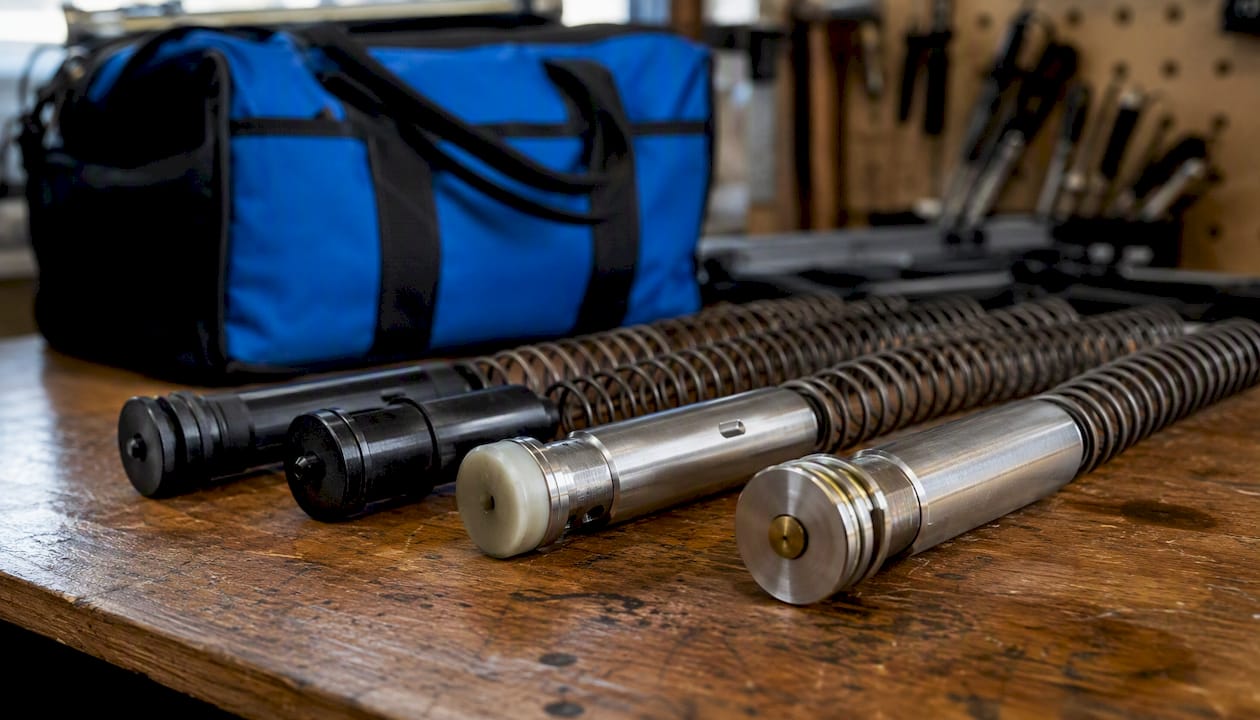
The naming convention follows a simple pattern: each step in the Colt H-series adds weight by swapping one steel weight inside the buffer for a denser tungsten weight. A standard carbine buffer has three steel weights; an H1 replaces one with tungsten; an H2 replaces two; an H3 replaces all three. That incremental swap is why the weights climb predictably. AR Build Junkie’s specs and Ar15 both confirm the typical ounce ranges below.
| Buffer Name | Typical Weight (oz) | Best-For Application | Compatibility Notes |
|---|---|---|---|
| Carbine (standard) | standard weight | Carbine-gas, unsuppressed, standard triggers | Carbine-length buffer tube only |
| H / H1 | heavier weight | Carbine-gas with slightly hot ammo; mid-length unsuppressed | Carbine-length buffer tube |
| H2 | heavier weight | Suppressed carbine/mid-length; FRT builds; over-gassed carbines | Carbine-length buffer tube |
| H2.5 | an intermediate weight | FRT builds where H2 is marginal; tight timing windows | Carbine-length buffer tube |
| H3 | heaviest standard weight | Persistently over-gassed suppressed builds; heavy-port carbines | Carbine-length buffer tube |
| Rifle | heavier and longer buffer | Rifle-length gas systems (20" rifles, A2/A4 platforms) | Rifle-length buffer tube only — will NOT fit carbine tube |
| Pistol / PCC | heavier and varying weights | 9mm and pistol-caliber blowback builds | Dedicated PCC buffer tubes; not interchangeable with standard AR gas buffers |
The H2.5 sits in a narrow niche. AR Takedown Tool’s buffer guide explains that competition builders use it specifically to hit a timing window where H2 is barely enough and H3 causes sluggish carrier recovery, particularly on forced-reset-trigger setups. It’s not an industry standard you’ll find on every shelf, but it’s a real tool for tight tuning.
Specialty heavy buffers from MGI and HeavyBuffers.com (their HSS and XH lines) go well beyond H3 territory. They use internal mechanics similar to reciprocating designs and can dramatically reduce felt recoil, but they carry real trade-offs: higher cost, potential short-stroking in marginal gas setups, and installation and testing requirements that go beyond a standard buffer swap.
How do gas system length and suppressors change your buffer choice?
Gas system length determines how early in the bullet’s travel the gas port bleeds pressure back to the BCG. A carbine-gas port (typically on a 16" barrel) is closer to the chamber, so the BCG sees higher pressure for a shorter time. A mid-length port gives the bullet more travel before gas bleeds off, resulting in lower peak pressure and a slightly slower carrier. Rifle-length gas (on 20"+ barrels) is gentler still.
The practical result: carbine-gas builds are the most likely to be over-gassed with factory ammo, which is why the H-series buffers exist in the first place. Mid-length builds often run well with a standard carbine buffer or H1. Rifle-length platforms typically use a dedicated rifle buffer and rifle spring, which are physically longer and won’t fit a carbine tube.
Suppressors change the equation significantly. A can traps gas behind the muzzle, raising back pressure and pushing more gas back through the system. RifleConfigurator’s tuning guide recommends starting with H2 for most suppressed builds and only stepping to H3 if over-gassed symptoms persist after the H2 install.
Decision checklist for suppressed vs. unsuppressed tuning:
- Unsuppressed carbine-gas: Start with standard carbine buffer (3.0 oz); step to H1 or H2 if ejection is forward of 2 o’clock or bolt bounce is visible.
- Unsuppressed mid-length: H1 or standard carbine buffer is usually sufficient; H2 for hot-loaded ammo.
- Suppressed (any gas length): Start at H2; move to H3 only if H2 still ejects forward or shows heavy bolt bounce.
- Suppressed short-barrel (pistol-length gas): Consider an adjustable gas block alongside H2 or H3; buffer weight alone may not be enough.
- FRT builds: H2 minimum; H2.5 if H2 causes reset timing issues.
Pro Tip: If you don’t have an adjustable gas block, always try stepping up buffer weight before making any other changes. It’s the cheapest, fastest, and most reversible adjustment available.
For suppressed builds on short barrels, also consider the interaction between barrel length and suppressor back pressure. A suppressed 300 Blackout barrel running subsonic loads behaves very differently from a 16" 5.56 with a full-power can, and buffer selection needs to account for that.
How do you diagnose over-gassed and under-gassed operation?
Symptoms tell you almost everything you need to know before you pull a single part.
Over-gassed signs:
- Brass ejects forward of 2 o’clock (toward 12 o’clock or even left of the shooter)
- Audible or visible bolt bounce at the rear of the buffer tube
- Primer cratering or flattened primers beyond normal
- Accelerated wear on the BCG, cam pin, and upper receiver
- Felt recoil is sharp and snappy rather than a rolling push
Under-gassed / short-stroking signs:
- Failures to eject or extract
- Bolt fails to lock back on an empty magazine
- Brass ejects weakly, landing close to the shooter or at 5–7 o’clock
- Stovepipes or double feeds caused by the carrier not traveling far enough rearward
Stepwise troubleshooting sequence:
- Verify ammo. Confirm you’re using the weakest ammo you plan to run. Under-gassed symptoms with weak ammo may disappear with standard loads.
- Try a heavier buffer. Step up one increment (e.g., carbine to H1, H1 to H2). This is the lowest-risk first move.
- Check spring condition. A worn or inconsistent spring causes cycling problems that no buffer swap will fix. Replace with a quality spring before drawing conclusions.
- Install an adjustable gas block. If buffer changes alone don’t resolve the issue, an adjustable gas block gives you precise control over gas volume.
- Test with your weakest planned ammo. Confirm the rifle cycles reliably with the lightest load you’ll ever run. A setup that works only with hot ammo is not a reliable setup.
- Swap back if short-stroking appears. If a heavier buffer causes failures to feed or lock back, drop back one increment immediately.
Safety note: perform all function tests with the rifle pointed in a safe direction. Confirm any buffer/spring combo with live-fire range testing before relying on the rifle. For suppressed testing, use the same ammo and shot cadence every session so your baseline is consistent.
What you need to know about buffer tube fit and compatibility
Not every buffer fits every tube, and getting this wrong means either a buffer that rattles loose or one that won’t seat at all.
Carbine vs. rifle buffer tubes: Carbine-length tubes are shorter. A rifle buffer is physically longer and will not fit inside a carbine tube. If you’re running a collapsible stock on a standard AR-15 lower, you have a carbine tube and must use carbine-length buffers (standard through H3). Rifle-length buffers are for fixed-stock A2/A4-style platforms with the longer tube.
A5/Vltor-style systems: The Vltor A5 buffer system uses a longer buffer and a longer spring than standard carbine setups. A5 buffers are not interchangeable with standard carbine buffers, and the spring is longer than a standard carbine spring. The A5 system offers smoother cycling and more tuning range, but you need the matching A5 buffer tube, buffer, and spring as a matched set.
9mm and pistol-caliber blowback builds: These operate on a completely different principle. There’s no gas system; the BCG cycles purely from blowback pressure. PCC buffers are typically much heavier (often 5–8+ oz) and use stiffer springs to slow a heavier, faster-moving blowback BCG. Standard AR gas buffers are not interchangeable with PCC buffers, and the spring rates are different enough that mixing them is a reliability problem.
Installation checklist:
- Clear and verify the rifle is unloaded before any disassembly.
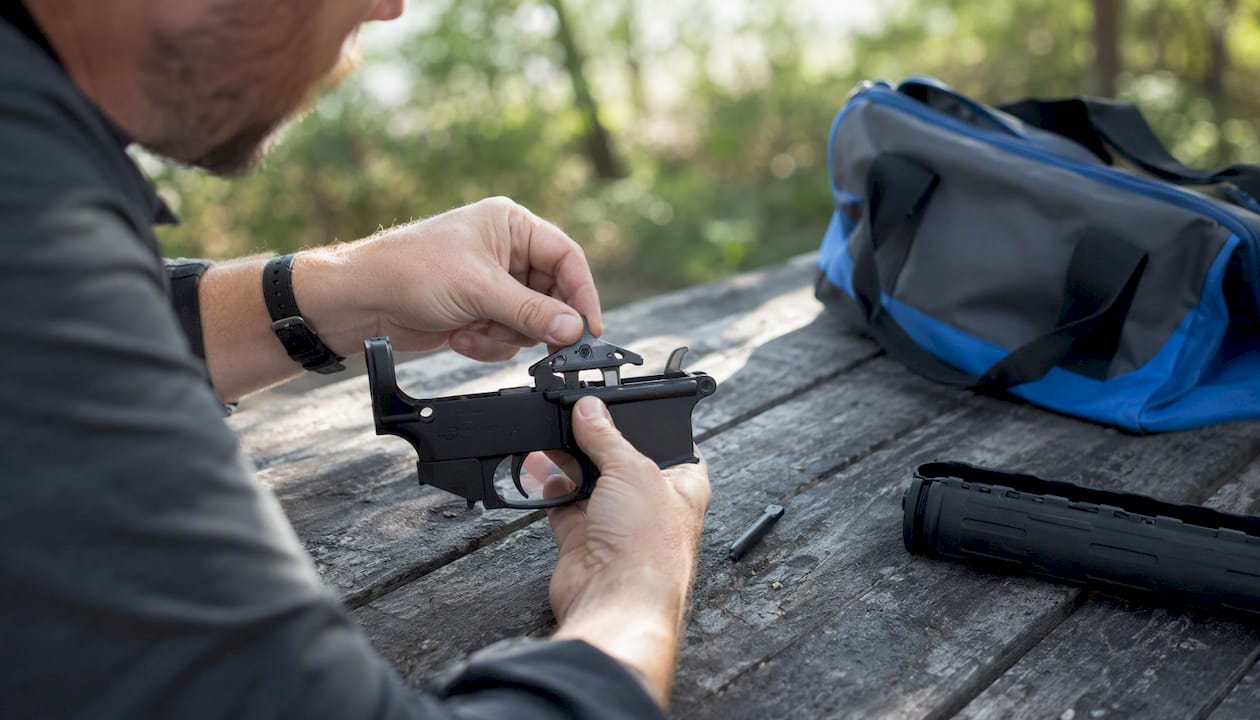
- Remove the stock and buffer tube cap; note the retainer pin orientation before pulling the buffer.
- Install the new buffer with the open/spring end facing the BCG.
- Confirm the retainer pin seats correctly and holds the buffer in place.
- Cycle the action by hand and confirm full bolt travel and lock-back on an empty magazine.
- Conduct a live-fire function test before trusting the setup.
Practical buffer and spring combos for common AR-15 builds
These are starting points, not final answers. Every rifle is slightly different, and live-fire confirmation is always the last step.
Carbine-gas, unsuppressed, standard trigger: Standard carbine buffer (3.0 oz) with a standard carbine spring. This is the factory baseline for most 16" AR-15s and works reliably with mil-spec ammo. If ejection runs forward of 2 o’clock, step to H1.
Mid-length, unsuppressed: H1 (3.8 oz) with a standard or enhanced-power spring. Mid-length gas is gentler than carbine, so the H1 adds just enough mass to smooth the cycle without risking short-stroking.
Carbine-gas, suppressed: H2 (4.6 oz) with a quality spring from Sprinco or Geissele. The suppressor raises back pressure enough that a standard buffer will over-gas the system noticeably. Start here and move to H3 only if symptoms persist.
Mid-length, suppressed: H2 with an enhanced-power spring. The combination handles the added back pressure while keeping enough energy for reliable cycling. Check ejection pattern after the first 20 rounds.
Carbine-gas with FRT or competition trigger: H2 or H2.5 (~5.1 oz) with an enhanced spring. FRT builds need the extra mass to control carrier speed precisely. If H2 causes reset timing issues, the H2.5 bridges the gap without the sluggishness of H3.
Rifle-length gas (20" platform): Rifle buffer (5.0–5.3 oz) with a rifle-length spring. These are physically different from carbine components and must be matched to a rifle-length buffer tube.
9mm / PCC blowback: Heavier PCC-specific buffer (typically 5–8+ oz depending on the BCG mass) with a heavier PCC spring. Do not substitute standard AR gas buffers here.
Pro Tip: Always confirm a heavier buffer with the weakest ammo you plan to run. A setup that cycles perfectly with 62-grain M855 but short-strokes with 55-grain bulk ammo is not a finished tune.
For suppressed builds, the baffle strike prevention guide at Blvista is worth reading alongside your buffer tuning, since excessive carrier speed from an under-buffered suppressed setup is one of the contributing factors in baffle strikes.
Why spring quality matters as much as buffer weight
A buffer swap gets most of the attention, but the spring is doing half the work. AR Build Junkie’s buffer basics makes the point directly: consistent spring quality often resolves cycling inconsistencies better than buffer swaps alone. A spring with inconsistent wire diameter or poor heat treatment delivers variable force across its compression range, which means the BCG doesn’t return to battery at the same speed shot to shot.
Sprinco publishes color-coded spring power levels (reduced, standard, enhanced, extra-power) and recommends specific pairings with buffer weights for different gas-port conditions and calibers. Their guidance is one of the cleaner frameworks for matching spring rate to buffer mass. Geissele’s spring offerings follow a similar philosophy: tighter tolerances and consistent wire quality translate to more predictable lock time.
When to choose a higher-power spring:
- Suppressed builds where back pressure is high and you want the carrier to return with authority
- Builds with heavier buffers (H2/H3) where a standard spring may not provide enough return force
- Any build where you’re seeing sluggish bolt return or failures to go fully into battery
When to avoid extra-power springs:
- 9mm and PCC blowback builds, where spring rate is calibrated to BCG mass and adding a stiffer spring can cause feeding problems
- Builds already running at the edge of under-gassing, where a stiffer spring compounds the problem
Confirming a spring/buffer combo follows the same protocol as any other change: function test dry, then live-fire with your weakest planned ammo, then confirm with your standard load.
The case for leaving a service rifle alone
There’s a version of this tuning conversation that ends with someone spending $150 in parts to fix a rifle that was running fine. If your AR-15 is a home-defense or duty gun, and it cycles reliably with your chosen defensive ammo, the factory buffer setup is probably correct. Manufacturers like Colt, Aero Precision, and Magpul spec their buffer weights to work with standard mil-spec ammo and standard gas setups. Changing that without a clear symptom to fix introduces variables you don’t need in a gun you depend on.
The builds that genuinely benefit from buffer tuning are suppressed rifles, competition guns with non-standard triggers, and builds running non-standard gas setups. A mid-length 16" with a quality mid-length gas system and standard ammo is unlikely to need anything beyond a standard carbine buffer or H1. The H2 earns its place the moment a suppressor goes on the muzzle or an FRT goes in the lower.
The one universal upgrade worth making regardless of build: replace a factory mil-spec spring with a quality Sprinco or Geissele spring. It’s a $15–25 change that reduces cycling variability without touching your gas timing. That’s the kind of improvement that makes a real difference without creating new problems to solve.
Get your buffers and springs from Blvista
Sorting through buffer weights and spring pairings is straightforward once you know what your build needs. Finding the right parts in stock is a different problem. Blvista stocks AR-15 components including buffers, springs, and accessories from trusted brands, with expert support available if you’re not sure which weight fits your specific gas length and suppressor setup.
Whether you’re setting up a suppressed mid-length build, dialing in an FRT carbine, or just replacing a worn spring on a duty rifle, Blvista’s catalog covers the components you need. Browse the AR-15 parts and accessories section or reach out to the team directly for build-specific guidance. Fast fulfillment means you’re back at the range sooner.
Sources
- How and Why to Change Buffer Weight on AR-15 Rifles – RifleShooter
- AR-15 Buffers and Buffer Springs Basics – AR Build Junkie
- AR-15 Buffer Weight Guide: H2, H2.5, H3, Reciprocating & Silent Buffers Explained (2026)
- Sprinco
- Ar15
Test every recommendation against the weakest ammo you plan to run. A buffer combo that works with hot 62-grain loads but short-strokes with 55-grain bulk ammo is not a finished tune.
Recommended
Was this useful?