
Brief
PSA AXR SSP: Modular Short‑Stroke Piston Platform for Serious Shooters
Detailed look at the PSA AXR SSP short‑stroke piston rifle platform, its modular design, real‑world use cases, and how to evaluate it for 2A ownership.
Shop this at BLVista
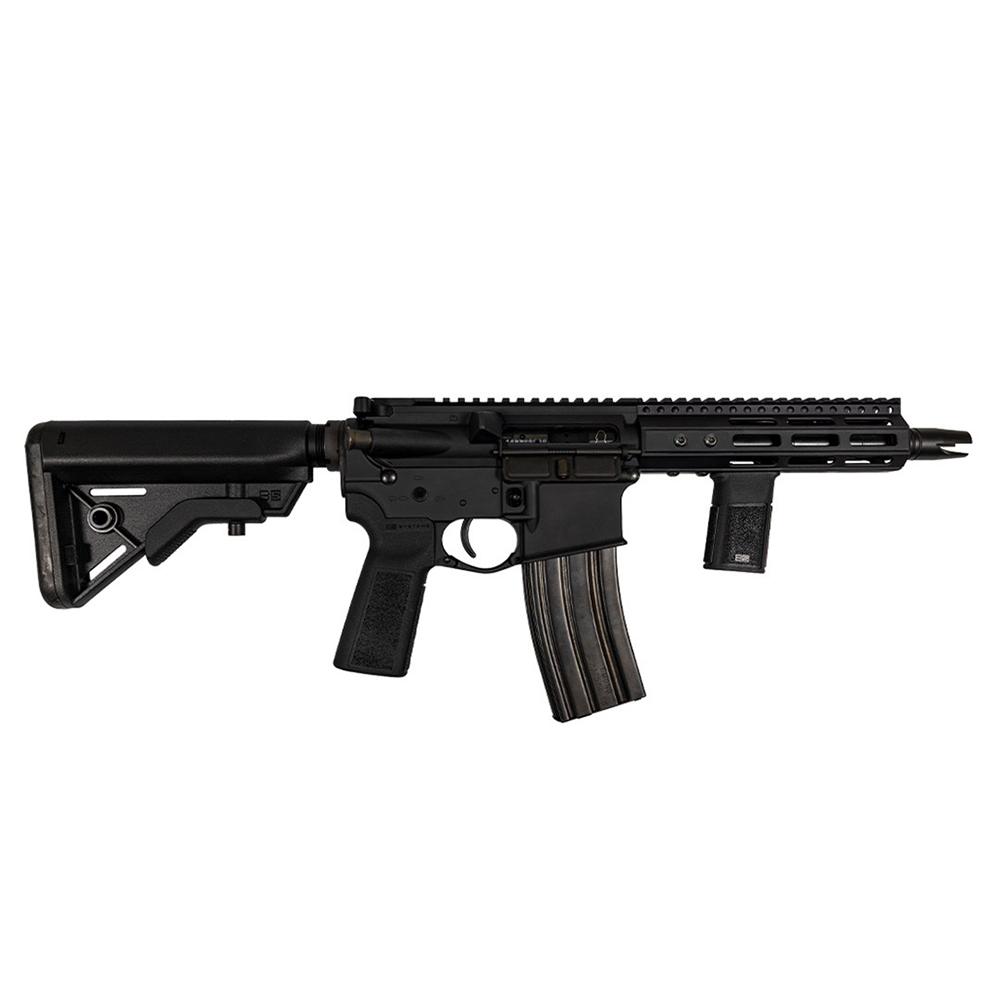 Franklin Armory Reformation RS7 Handgun .300 Blackout 30rd Magazine 7.5" NRS Barrel Custom Tuned Trigger Black GCA firearm NON-NFA
 Wheeler Engineering Cerama-Coat Firearm Finish - Flat Dark Earth 2oz.
 G96 Firearm Cleaner/Degreaser 4 oz. Bottle
 Birchwood Casey Renewalube Bio Firearm Oil 11 ounce aerosol
PSA AXR SSP: Modular Short‑Stroke Piston Platform for Serious Shooters
Palmetto State Armory’s AXR SSP arrives at a time when many new rifles focus on finishes and minor tweaks. The AXR SSP instead targets a different problem: how to give shooters a compact, piston‑driven 5.56 / .300 BLK platform that is modular, future‑ready, and friendly to existing AR‑15 parts.
This is not a single rifle configuration. It is a short‑stroke piston ecosystem with a common lower receiver, swappable uppers, and support for multiple cartridges. For BLVista readers who care about reliability, real use performance, and long‑term ownership, that design choice matters more than color options.
Core Specs and What They Mean in Practice
- Calibers: 5.56 NATO, .300 Blackout (with design support for 6mm ARC and .338 ARC)
- Action: Semi‑automatic, short‑stroke gas piston
- Capacity: 30+1 (standard AR pattern magazines)
- Barrel lengths at launch: 6.5 inch (.300 BLK), 14.5 inch (5.56 NATO)
- Country of origin: USA
- MSRP: Not yet announced
Those specs point to three primary use cases:
- General purpose 5.56 carbine: A 14.5 inch barrel configured correctly can cover patrol‑style roles, defensive use, and training.
- Short .300 BLK package: A 6.5 inch .300 Blackout upper suits suppressed use, tight indoor environments, vehicle work, and compact storage.
- Future intermediate calibers: Support for 6mm ARC and .338 ARC signals that the platform is being built for greater reach and ballistic flexibility, not just current trends.
From a buyer’s perspective, the AXR SSP is positioned as a compact, modular system that can flex between home defense, range training, and field carry, with a path into precision‑oriented intermediate cartridges over time.
Lower Receiver: Where Compatibility Saves Money
The AXR SSP lower receiver blends proprietary geometry with standard AR‑15 interface points. It accepts AR‑15 triggers, pistol grips, and safeties, which has direct implications for cost, tuning, and longevity.
Why AR‑15 Parts Compatibility Matters
- Trigger choice: You can drop in the same duty‑grade or match trigger you already trust in your AR‑15. That lets you standardize pull weight and feel across rifles, which simplifies training and qualification.
- Ergonomics: Using your preferred AR‑15 grip and safety lever keeps manual of arms familiar. This reduces transition time between platforms during classes or under stress.
- Lifecycle cost: You avoid being locked into low‑availability proprietary controls. Replacement parts, spares, and upgrades are easier to source and usually cheaper.
At the same time, PSA uses proprietary geometry where needed to support the bufferless design and piston system. That is the tradeoff: you gain features you cannot achieve on a standard mil‑spec lower, but you need to treat certain components as platform‑specific.
Upper Receiver: Ambidextrous Controls and Future‑Proof Bolt Design
The upper is where most of the AXR SSP’s unique value lives.
Side‑Mounted Ambidextrous Charging Handle
A side charging handle, placed for ambidextrous use, affects real‑world handling:
- Optic clearance: No charging handle moving under your scope, which simplifies mounting of LPVOs, red dots with magnifiers, or night vision accessories.
- Manipulations with gear: Easier to run with a plate carrier, chest rig, or sling that crowds the rear of the receiver.
- Left‑handed use: Southpaw shooters benefit more from a true ambi side charger than from a traditional AR latch upgrade.
Redesigned Bolt with Dual Ejectors
The AXR SSP uses a proprietary bolt profile with dual ejectors. The design is intended for 5.56 NATO and .300 BLK, and it is structured to support 6mm ARC and .338 ARC in later configurations.
Reasons this matters in the field:
- Extraction under stress: Dual ejectors can offer more consistent ejection with higher pressure or different case geometries. That matters when you run mixed ammunition or hotter loads through a compact gas system.
- Future caliber conversions: A bolt engineered for a wider pressure and cartridge envelope from the start tends to last longer when you shift calibers, provided you follow manufacturer guidance.
- Maintenance habits: More complex geometry calls for stricter inspection routines. You should plan to monitor ejector springs, pins, and lugs more carefully during cleaning.
Monolithic‑Style Rail and Handguard Architecture
The AXR SSP uses a standalone, full‑length Picatinny top rail that mates with the upper, paired with a handguard that mounts to the same core structure. This arrangement aims to give you the functional rigidity of a monolithic upper while keeping barrels and handguard lengths user‑swappable.
Field Impact of the Rail Design
- Optics stability: The optic sits on a rigid Pic rail that is not tied to the handguard for alignment. You can load a bipod, barricade, or sling into the handguard without pushing your optic off zero.
- Barrel swaps at home: You can change barrel length or caliber without a full shop setup, at least in concept. That allows you to move between a 14.5 inch 5.56 training carbine and a short .300 BLK package using one base receiver.
- Sighting systems: Fixed irons, magnifiers, and night devices benefit when everything shares one continuous, stable rail rather than multiple disconnected sections.
For shooters who like to experiment with setups but still care about repeatable accuracy, this structure has real value.
Short‑Stroke Piston System with Three Gas Settings
The AXR SSP uses a short‑stroke gas piston with three adjustable positions: suppressed, unsuppressed, and adverse.
Why Short‑Stroke Piston Instead of Direct Impingement
- Cleaner receiver: More combustion byproducts vent at the gas block instead of dumping into the bolt carrier group. That typically keeps the action cleaner over high‑round‑count sessions, especially with short barrels.
- Heat distribution: Heat stays more concentrated at the block and piston assembly instead of deep in the receiver. This benefits service life of some internal components.
- Suppressed use: Piston rigs often handle back pressure better when set correctly, which can reduce gas to the face and keep the system from being overdriven.
Three‑Position Gas System in Actual Use
- Suppressed: Set the gas to the suppressed position when running a can to avoid excessive bolt velocity and wear. This matters with short .300 BLK and high‑back‑pressure 5.56 cans.
- Unsuppressed: This is your baseline for standard ammunition and no suppressor. It should cover most range and field scenarios.
- Adverse: Use in very cold conditions, with weak ammunition, or when the rifle is extremely dirty and you still need it to run. Think field courses, extended training blocks, or duty use without time for full cleaning.
For best results, document which setting you use with each ammunition type and barrel length. A small log stored in your range bag or digital notes will speed troubleshooting and keep your rifle running smoothly.
Bufferless Operation and Folding Stock Capability
The AXR SSP is a bufferless design. It does not use the traditional AR‑15 buffer tube and internal buffer system, which opens the door to factory folding stocks or braces where legally allowed.
Advantages of a Bufferless System
- Compact storage and transport: A side‑folding stock lets you store the rifle in shorter cases, vehicles, and safes. This matters for discreet transport and for agencies fitting patrol rifles into limited spaces.
- Vehicle and confined use: A folded configuration is easier to stage in vehicles, UTVs, or small structures and then deploy quickly.
- Alternative stock designs: Without a receiver extension dictating stock geometry, designers can tune cheek weld and length of pull in ways closer to traditional rifles.
Recoil and Handling Tradeoffs
Bufferless piston systems typically transmit recoil differently than AR‑15s. You may feel a sharper impulse compared to a well‑tuned DI gun with an optimized buffer and spring. That does not make the system unmanageable, but it means you should plan to spend focused range time dialing in stance, grip, and follow‑through for this specific rifle.
Intended Evolution from the JAKL Platform
PSA positions the AXR SSP as a follow‑on evolution to their JAKL series. The JAKL verified that customers wanted compact, bufferless, piston‑driven rifles that still shared some DNA with the AR world. The AXR SSP pushes further by aligning around a more modular, future‑caliber‑ready bolt and swappable upper structure.
For existing JAKL owners, the AXR SSP represents a more ambitious architecture rather than a simple iteration. For new buyers, it is a chance to start on a system that is designed around multiple chamberings and home‑configurable barrel options.
Practical Selection Framework for the AXR SSP
If you are evaluating the AXR SSP against AR‑15s and other 5.56 rifles, use a simple decision checklist:
1. Define Primary Role
- Home and property defense: A compact upper, folding stock, and piston system can be attractive, especially with .300 BLK for suppressed use.
- Training and classes: Look at parts compatibility, spare availability, and ease of field maintenance. AR‑trigger support gives the AXR SSP an advantage.
- Hunting and field carry: Consider caliber options and future support for 6mm ARC or .338 ARC, especially if you want more reach in a compact package.
2. Consider Legal Compliance
- Check barrel length, overall length, and stock / brace configuration against federal law.
- Confirm state and local requirements related to pistol braces, folding stocks, and magazine capacity.
- For NFA items such as SBR setups or suppressors, build your configuration plan around current regulations and lead times.
3. Evaluate Ownership Costs
- Initial purchase: MSRP is not yet public, so budget with a range and compare to quality DI AR builds and other piston systems.
- Caliber conversion cost: Factor in barrel assemblies, handguards if needed, and optics that match the role of each upper.
- Maintenance: Plan for spare gas pistons, springs, and ejector components, since those will be more specialized than AR parts.
4. Plan for Training Time
- Allocate range sessions to learn the recoil characteristics and gas settings.
- Practice malfunction clearing and reloads with the side charging handle and any folding stock configuration.
- Standardize manual of arms across your rifles where possible, using common triggers, grips, and safeties.
Durability, Maintenance, and Long‑Term Ownership
A piston rifle lives or dies by how its owner maintains the gas system and moving interfaces.
Key Maintenance Areas
- Piston and gas block: Carbon accumulates here first. Regular inspection and cleaning are critical, especially if you shoot suppressed .300 BLK or run extended training days.
- Bolt and dual ejectors: Monitor springs, extractor tension, and lug wear. Use quality lubricant and keep track of high round counts.
- Folding stock hinge: If equipped, keep hinge hardware clean, properly torqued, and lightly lubricated where specified by the manufacturer.
Storage and Transport Considerations
- Cases: Folding capability allows shorter hard and soft cases, but protect the side charger and gas block from impacts.
- Environmental exposure: After rain, snow, or dust, prioritize cleaning the piston assembly and bolt. Compact, short‑barrel systems often see higher gas and fouling loads.
- Safe configuration: Store with chamber flagged and magazine removed. Consider storing folded to save space, but ensure the firearm cannot close on a chambered round while accessed by unauthorized users.
Where the AXR SSP Fits in a Broader Rifle Lineup
For many shooters, the AXR SSP will not replace a well‑sorted 16 inch DI AR‑15 used for general practice. Instead, it fills roles where compactness, folding stocks, and piston operation add meaningful capability.
- Primary home defense or truck rifle when you want a short, handy system with reliable operation under mixed conditions.
- Secondary platform for suppressed .300 BLK work, with the option to run 5.56 or future ARC calibers on the same lower.
- Training rifle if you want to learn piston behavior, gas adjustment, and folding stock management while keeping AR‑style controls.
When pricing becomes public, the real test will be whether the AXR SSP delivers enough functional value to justify its cost relative to trusted DI and other piston platforms. Its modular design, AR‑parts compatibility, and bufferless folding potential give it a strong starting point.
FAQ
The AXR SSP can offer specific advantages for home defense, especially in compact configurations. The bufferless system allows a folding stock for shorter storage and faster deployment in tight spaces. The short-stroke piston design with a three-position gas block supports suppressed use and keeps the action cleaner with short barrels. A quality 16 inch DI AR-15 still works well for many users, but if you value compactness, side charging, and gas tuning for a suppressor, the AXR SSP has clear strengths.
At launch, the AXR SSP is configured for 5.56 NATO and .300 Blackout. The bolt and system geometry are designed to support 6mm ARC and .338 ARC in future models. This gives you a path from close-range and defensive work with .300 BLK up to intermediate distance and hunting roles with ARC cartridges, all on a shared ecosystem.
The AXR SSP shifts more fouling to the gas block and piston, which helps keep the receiver cleaner. You will spend more time maintaining the piston assembly and monitoring dual ejectors, while the bolt and carrier may require less carbon scraping than a DI system. If you build a habit of cleaning the gas components and inspecting springs and lugs, long-term reliability should be strong. For many shooters the overall maintenance workload is similar, just focused on different parts.
Legality depends on barrel length, stock or brace configuration, and local definitions of features such as folding stocks and magazine capacity. Before purchase, verify your state and local regulations around pistol braces, overall length, SBR status, and any feature bans. If you intend to run a short-barreled configuration or suppressor, you must also follow federal NFA rules. BLVista recommends confirming current laws with your state resources or a qualified attorney before you configure or register the firearm.
MSRP has not been announced, so treat the rifle as a mid- to upper-tier purchase compared to complete DI AR-15s and other piston systems. Budget for the base rifle plus optics, sling, white light, magazines, and potentially a suppressor. If you plan to use multiple calibers, include the cost of additional uppers or barrel assemblies and dedicated optics where appropriate. A realistic plan for most buyers will range from the rifle alone at entry cost to a fully equipped system at several times that number.
Yes. The AXR SSP lower is built to accept standard AR-15 triggers, pistol grips, and safeties. That allows you to reuse trusted components, match trigger feel across rifles, and rely on a broad aftermarket for upgrades and replacements. For shooters who already invested in quality AR parts, this materially reduces the cost and risk of adopting the new platform.
The short-stroke piston system and three-position gas block are well suited to suppressed shooting. By selecting the suppressed setting you can reduce bolt speed, manage gas blowback, and limit excess wear. This is especially beneficial on the 6.5 inch .300 BLK configuration, which is often run suppressed. Correct gas tuning combined with quality subsonic or supersonic ammunition will deliver more reliable cycling and a more comfortable shooting experience.
For close to mid-range hunting, particularly with .300 BLK in thick cover or from stands, the AXR SSP’s compact size and folding stock can be very useful. As future 6mm ARC and .338 ARC models emerge, the platform will become more attractive for open country and medium-game applications where flatter trajectories help. Ensure you select legal chamberings and magazine capacities for your hunting regulations, and match barrel length and optic choice to your expected engagement distances.
Use a hard or padded case that protects the side charging handle, optics, and gas block. If the rifle has a folding stock, you can select a shorter case, which simplifies transport in vehicles or confined storage. For home storage, keep the chamber empty, use a visible chamber flag, and store magazines separately or unloaded according to your safety plan. A quality safe or lockable cabinet that fits the folded length will provide better security and compliance with local storage rules where required.
The AXR SSP is not intended to replace every AR-15, but to cover scenarios where a compact, piston-driven, folding platform brings added capability. If your AR-15 already covers general training, adding an AXR SSP can give you a dedicated home defense or truck rifle, a suppressor-optimized .300 BLK setup, or a future ARC-caliber hunting and field rifle. With shared AR-15 triggers and controls, you gain this flexibility without relearning your manual of arms, which keeps training time efficient.
Was this useful?